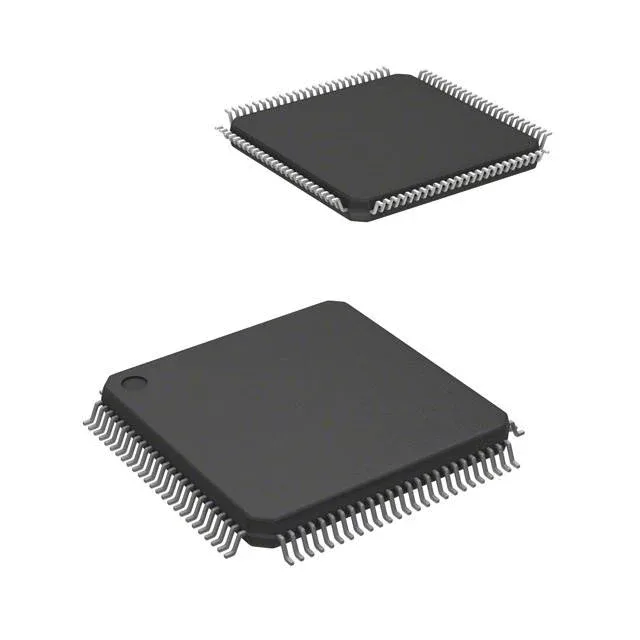
Texas Instruments LM3S2939-IQC50-A2 — Microcontrollers & Processors (MCU / MPU / DSP)

LM3S2939-IQC50-A2 Stellaris ARM Cortex-M3 MCU, 50MHz

MPNLM3S2939-IQC50-A2
NRND

Texas Instruments Stellaris® ARM® Cortex®-M3S 2000 series MCU, LM3S2939-IQC50-A2, 32-Bit Single-Core, 50MHz, 256KB Flash, 64K x 8 RAM, 100-LQFP, -40°C~85°C.

$18.7872Ref. price · indicative, final on quote
Independent supplier — new & surplus stockAuthenticity-screened · ESD-safe packingListing updated Jul 2026

Specifications

LM3S2939-IQC50-A2 specifications
ParameterValue
SeriesStellaris® ARM® Cortex®-M3S 2000
MountingSurface Mount
Oscillator typeInternal
Program memory typeFLASH
Voltage - supply (Vcc (Vdd))2.25V ~ 2.75V
Operating temperature-40°C~85°C(TA)
Speed50MHz
PackageTray
RAM size64K x 8
Core size32-Bit Single-Core
PeripheralsBrown-out Detect/Reset, POR, PWM, WDT
ConnectivityCANbus, I²C, IrDA, Microwire, QEI, SPI, SSI, UART/USART
Number of i (O)57
Core processorARM® Cortex®-M3
Case100-LQFP
Data convertersA/D 3x10b
Program memory size256KB (256K x 8)

Product details

What this Stellaris Cortex-M3 brings to the board

The LM3S2939-IQC50-A2: It is packaged in a 100-pin LQFP (14x14 mm) for surface-mount assembly.

The 50 MHz Cortex-M3 delivers roughly 1.25 DMIPS/MHz, or about 62.5 DMIPS peak. That is enough headroom for a single motor-control FOC loop running at 20 kHz with sensor feedback, or a CAN gateway handling a few hundred messages per second. The 64 KB SRAM supports moderate-sized data buffers and a real-time OS with a few tasks. If your application needs more throughput or memory, the 50 MHz ceiling and 256 KB Flash define the upper bound of this part's capability.

Connectivity and I/O for industrial bus integration

The CAN interface lets it sit on a factory-floor network; the QEI reads incremental encoder pulses directly without external logic. The 3-channel 10-bit ADC provides basic analog sampling for current sensing or potentiometer feedback. The internal oscillator reduces external BOM count, though a crystal can be added for tighter timing accuracy.

Frequently asked questions

Is LM3S2939-IQC50-A2 obsolete or NRND?

It remains available for existing production through independent distribution, but TI advises against starting new designs with this part.

What is the replacement for LM3S2939-IQC50-A2?

The closest migration path is to a pin-compatible Stellaris or Tiva C Series MCU from TI in the same 100-LQFP package, such as the TM4C123 or TM4C129 family — verify the peripheral set and memory match your firmware requirements before swapping.

What is the difference between LM3S2939 and LM3S2950?

The LM3S2950 is a higher-density sibling in the same Stellaris family. It typically offers more Flash and SRAM — the LM3S2939 has 256 KB Flash and 64 KB SRAM, while the LM3S2950 steps up to 256 KB Flash with 64 KB SRAM (same RAM) but adds a second CAN interface and a few more GPIO. Both share the 100-LQFP footprint and 50 MHz core, so a board-level swap is possible if the extra CAN port is needed.