What the 50 MHz Cortex-M3 core means for your BOM line
The LM3S2939-IBZ50-A2 is a Texas Instruments Stellaris® ARM® Cortex®-M3S 2000 microcontroller, 32-bit single-core, clocked at 50 MHz. The 50 MHz ceiling sets the throughput for the CANbus, I²C, SPI, and UART peripherals — each peripheral's baud rate divider derives from the system clock, so the effective data rate on the bus is limited by this core speed, not the peripheral itself.
Package, temperature grade, and board-fit constraints
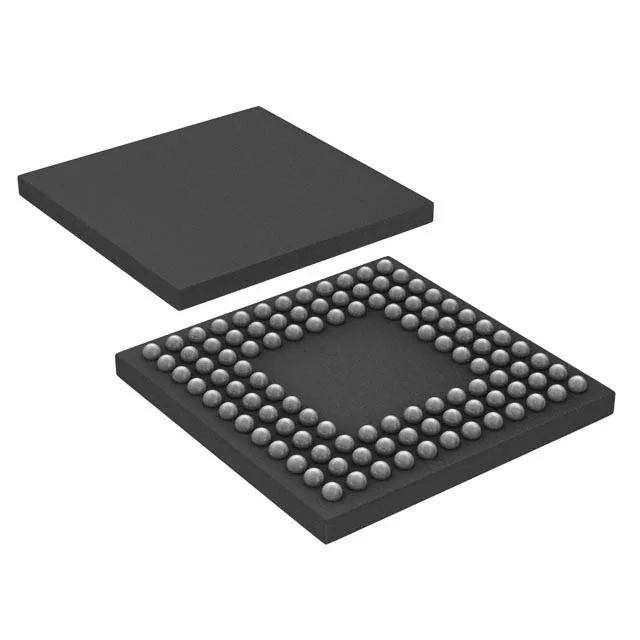
Housed in a 108-LFBGA (10x10 mm body, 0.80 mm ball pitch), the LM3S2939-IBZ50-A2 requires a multi-layer PCB for fan-out — the inner rows of the BGA are not routable on a two-layer board. The supplier device package is 108-BGA (10x10). The 57 general-purpose I/O pins are 3.3 V-tolerant on the Stellaris family — the datasheet's absolute-max rating for the I/O pads is 3.6 V, so a 3.3 V peripheral bus connects directly without a level translator.
Connectivity and peripheral set at a glance
On-chip peripherals include CANbus, I²C, IrDA, Microwire, QEI, SPI, SSI, and UART/USART — the QEI (quadrature encoder interface) is the distinguishing block for motor-feedback applications that a generic Cortex-M3 lacks. Three 10-bit ADC channels are built in, enough for single-phase current sensing or a potentiometer input. Brown-out detect, POR, PWM, and a watchdog timer are integrated — no external supervisor IC needed for basic reset and fault handling. The internal oscillator means a crystal is optional for applications that tolerate the factory-calibrated accuracy.
Lifecycle reality — obsolete, sourced through surplus channels
Texas Instruments lists the LM3S2939-IBZ50-A2 as obsolete. Available through independent distribution on a quoted-to-order basis. Each lot is date-code and provenance checked before shipment — no mystery stock. The base product number is LM3S2939; buyers searching for active substitutes should evaluate the Tiva-C TM4C123x or TM4C129x families for a functional, though not pin-compatible, migration path.