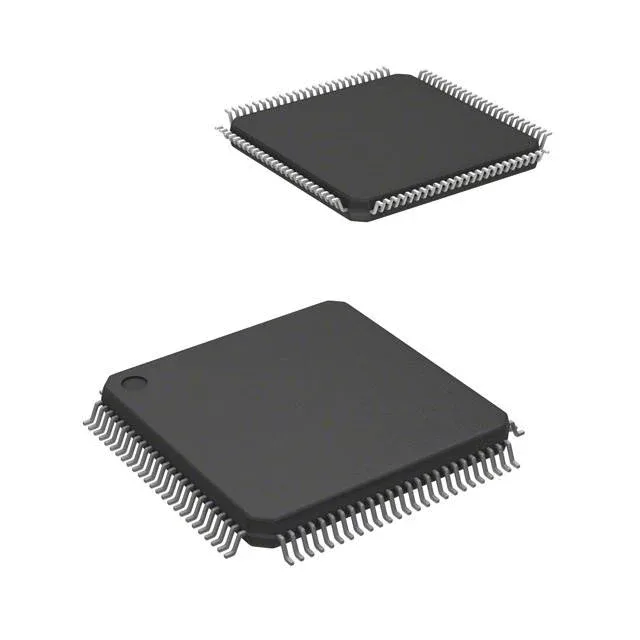
Texas Instruments LM3S2620-IQC25-A2T — Microcontrollers & Processors (MCU / MPU / DSP)

LM3S2620-IQC25-A2T Stellaris ARM Cortex-M3 MCU, 25 MHz

MPNLM3S2620-IQC25-A2T
NRND

Texas Instruments Stellaris® ARM® Cortex®-M3S 2000 series MCU, LM3S2620-IQC25-A2T, 32-Bit Single-Core, 25MHz, 128KB FLASH, 32K x 8 RAM, CANbus/I²C/SPI/UART, 52 I/O, -40°C~85°C, 100-LQFP.

$15.6137Ref. price · indicative, final on quote
Independent supplier — new & surplus stockAuthenticity-screened · ESD-safe packingListing updated Jul 2026

Specifications

LM3S2620-IQC25-A2T specifications
ParameterValue
SeriesStellaris® ARM® Cortex®-M3S 2000
MountingSurface Mount
Oscillator typeInternal
Program memory typeFLASH
Voltage - supply (Vcc (Vdd))2.25V ~ 2.75V
Operating temperature-40°C~85°C(TA)
Speed25MHz
PackageTape & Reel (TR)
RAM size32K x 8
Core size32-Bit Single-Core
PeripheralsBrown-out Detect/Reset, POR, PWM, WDT
ConnectivityCANbus, I²C, IrDA, Microwire, QEI, SPI, SSI, UART/USART
Number of i (O)52
Core processorARM® Cortex®-M3
Case100-LQFP
Program memory size128KB (128K x 8)

Product details

The LM3S2620-IQC25-A2T: Connectivity is a strong suit: the peripheral set includes CANbus, I²C, IrDA, Microwire, QEI, SPI, SSI, and UART/USART interfaces, so it can bridge between legacy fieldbus networks and modern serial sensors or actuators without external protocol chips.

The 25 MHz core clock places this MCU in the mid-range of the Cortex-M3 performance band. It is not a high-speed DSP replacement, but it has enough throughput to run a CANopen stack, manage a PID control loop at a few kilohertz, and poll a handful of SPI sensors in a round-robin schedule without saturating the bus. The internal oscillator reduces external BOM count for applications that can tolerate its accuracy, though a precision crystal can still be attached through the on-chip clock tree. Designs requiring over-the-air update staging or large lookup tables will need to budget the Flash carefully.

This is an official Texas Instruments designation that means the part remains available for existing production programs but is no longer being actively marketed for new socket wins. There is no announced last-time-buy date in the current record, but the NRND flag is the standard precursor to eventual end-of-life — any new BOM should plan for a migration path. For a production line already qualified on this MCU, the NRND status is a signal to secure enough inventory to cover the remaining build horizon and to begin evaluating a pin-compatible or functionally equivalent successor. The Stellaris family has broad parametric overlap within the same 100-LQFP footprint, so a drop-in replacement from the same series is the upgrade path.

Package and footprint — 100-LQFP with 52 I/O

Housed in a 100-LQFP package with a 14x14 mm body, this MCU offers 52 general-purpose I/O pins. The LQFP footprint is a standard for medium-density MCU designs — it is hand-solderable in rework, inspectable under a microscope, and does not require the via-in-pad or X-ray inspection that a BGA would demand.

Frequently asked questions

Is LM3S2620-IQC25-A2T NRND or obsolete?

It is not yet obsolete, but Texas Instruments has flagged it as not intended for new design wins. Existing production programs can still source it, but a migration plan should be on the roadmap.

What is the replacement or alternative for LM3S2620-IQC25-A2T?

A pin-compatible alternative within the same Stellaris ARM Cortex-M3S 2000 series in the 100-LQFP package is the most direct upgrade path. The exact order code depends on the required Flash and RAM density for your application — the series offers several density options that share the same footprint and peripheral set.

Is LM3S2620-IQC25-A2T compatible with LM3S2620-IQC25-A2?

The LM3S2620-IQC25-A2 and LM3S2620-IQC25-A2T share the same base product number (LM3S2620) and the same 100-LQFP package, speed grade, and temperature range. The suffix difference typically indicates packaging or tape-and-reel variation — the -A2T variant ships in Tape & Reel. Electrically and functionally they are the same silicon.