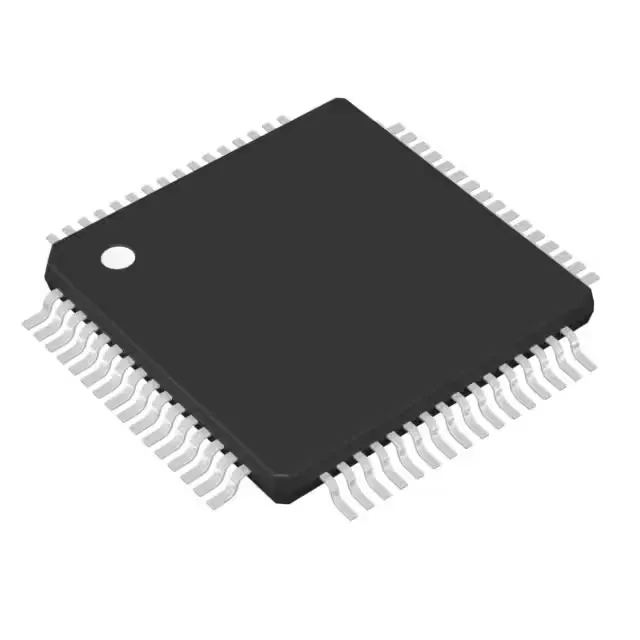
Stellaris ARM Cortex-M3 at 50 MHz — what the core and memory mean for the BOM
The 50 MHz core handles tight control loops and protocol processing without needing a higher-tier part, keeping the BOM cost in the mid-range MCU tier. On first power-up, the internal oscillator lets the core run without an external crystal; the SWD debug port stays alive even with the watchdog armed, matching the typical Cortex-M3 bring-up pattern.
Peripherals and connectivity — CAN, UART, and the 6-channel ADC
The 6-channel 10-bit ADC handles sensor acquisition on the same die, reducing external component count. The 33 GPIOs in a 64-LQFP package leave enough headroom for a keypad, status LEDs, and a parallel LCD interface in a single-board controller. The brown-out detect and POR ensure clean startup in noisy industrial environments.
NRND status — what it means for procurement and the production line
That means TI is no longer actively promoting this part for new projects, and a last-time-buy window may already be closing or closed. For existing production, this part is still available through independent distribution, but the supply window is finite. Anyone qualifying a new BOM should look at the official successor — TI's own Stellaris migration path leads to the TM4C series (Cortex-M4F) for a performance uplift and longer availability horizon. For a repair or a short production run, sourcing from broker or surplus channels is the realistic path; date-code provenance matters here because mystery stock surfacing years after the last-time-buy is a counterfeit flag.