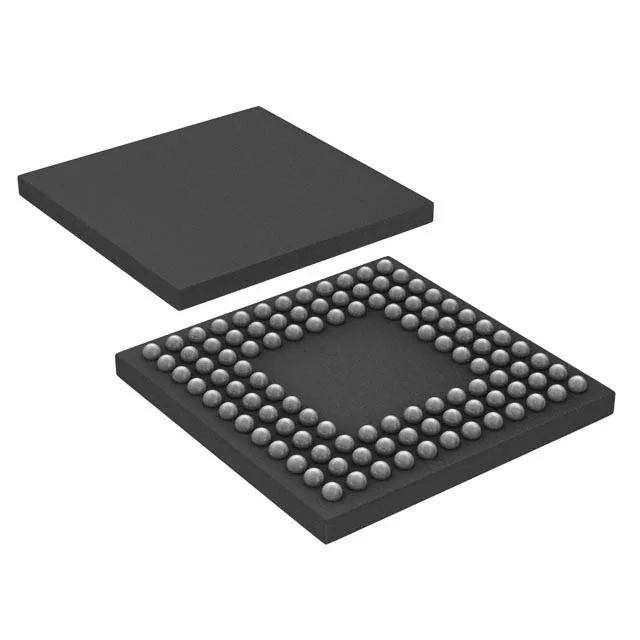
The LM3S2601-IBZ50-A2T: That means TI has stopped actively promoting it for new projects, though limited production may still run for existing customers. For an existing BOM that already qualifies this MCU, the NRND flag means sourcing is viable through the independent channel while inventory lasts, but a redesign window should be planned. New designs should avoid this part and look at current Stellaris or Tiva C Series Cortex-M4 parts with similar peripheral sets.
128 KB Flash, 32 KB RAM — memory headroom check
The 128 KB Flash (128K x 8) and 32 KB RAM (32K x 8) define the firmware budget. A typical CANopen stack with a basic application layer fits in 64–80 KB of code space, leaving room for a bootloader and modest data tables. The 32 KB RAM handles a few hundred bytes of CAN message buffers plus a real-time operating system kernel heap. If the application needs over-the-air update staging or large lookup tables, the 128 KB ceiling becomes tight — evaluate the Flash sector erase granularity from the datasheet before committing.
60 I/O and 108-ball BGA — footprint and routing
With 60 general-purpose I/O and a 108-ball LFBGA package (10x10 mm body), this MCU gives enough pins for a parallel LCD interface, multiple UARTs, and CAN transceiver control without resorting to a port expander.
That is a tighter window than the usual 3.3 V ±10% range, so a 2.5 V LDO is the natural regulator choice. Dropout on the LDO must hold 2.5 V output down to the 2.25 V minimum — a 250 mV dropout at the required load current is the design target.