What this MCU brings to a BOM
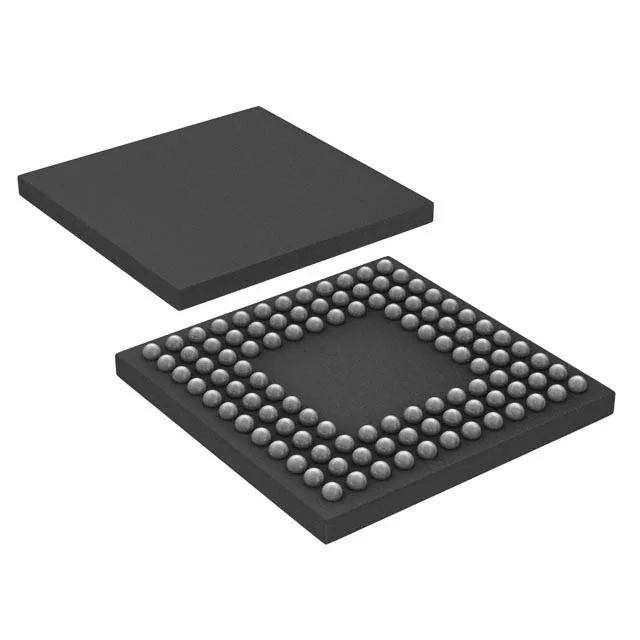
The LM3S2533-IBZ50-A2: It packs 96 KB of on-chip Flash and 64K x 8 of SRAM — enough for a moderate control loop or communication stack without external memory. The 108-LFBGA package (10x10 mm body) keeps the footprint compact, but the 0.5 mm pitch and BGA layout mean it's not a hand-solder candidate — plan for a reflow profile and a 4-layer board for fan-out.
Peripherals and connectivity for industrial control
48 general-purpose I/O lines give plenty of headroom for sensor inputs, actuator outputs, and a parallel LCD or keypad matrix. On-chip peripherals include a 3-channel 10-bit ADC, brown-out detect, POR, PWM, and a watchdog timer — enough to run a motor-control or human-machine interface node without external supervisory ICs. For serial communication, the part supports CANbus, I²C, IrDA, Microwire, SPI, SSI, and UART/USART — so it can talk to a CANopen fieldbus, a serial EEPROM, and a UART-to-USB bridge all on the same chip.
Supply voltage and temperature range
An internal oscillator is available, so a basic design can skip an external crystal — but for CAN or precision timing, an external clock source is still recommended.
Lifecycle reality: NRND and what that means
Texas Instruments lists this part as NRND (Not Recommended for New Designs). That means it's still available for existing production runs, but TI is not actively promoting it for new projects. For a new design, look at TI's current Stellaris or Tiva C Series parts — but verify pin-compatibility and memory size, because the 108-BGA footprint is not guaranteed to carry over. For BOM sustainment, we can source the LM3S2533-IBZ50-A2 against an RFQ through independent distribution channels.