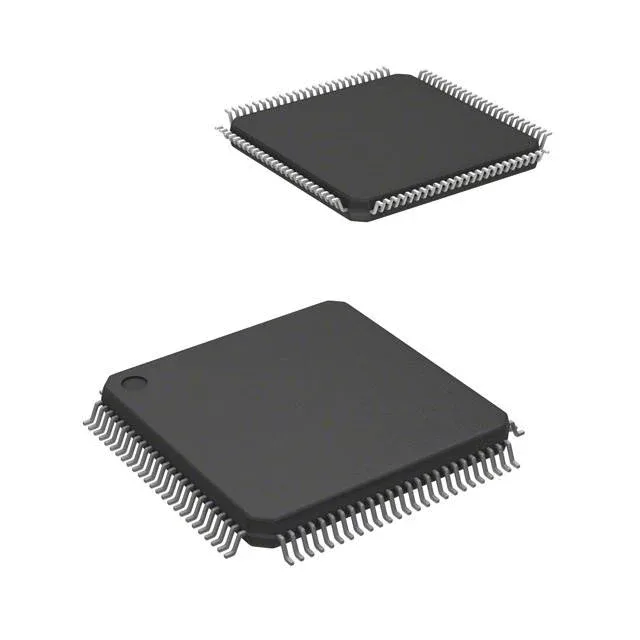
The 25 MHz clock rate is modest by today's standards, but it is deliberate: the Cortex-M3 pipeline executes most instructions in a single cycle, so the throughput is adequate for control loops running at a few kilohertz and for protocol handling on the CAN and UART interfaces. The 16 KB RAM supports a few hundred bytes of data buffers per peripheral; if your application needs large packet buffers or a frame buffer, you will hit the ceiling quickly. The 40 I/O pins in the 100-LQFP give you headroom for external sensors, relays, and a parallel LCD interface.
Peripherals and connectivity — what is on-chip
The CAN interface is the standout for industrial and automotive applications where you need a deterministic bus. The SPI and SSI ports handle external ADCs, DACs, or serial Flash. The UARTs support IrDA if you need wireless line-of-sight data transfer. No USB or Ethernet on this die — those go on the higher-density Stellaris variants.