At 80 MHz the Cortex-M3 delivers single-cycle multiply and hardware divide, with a 3-stage pipeline that keeps interrupt latency deterministic. For a sensor-fusion or motor-control loop running from internal Flash, that 80 MHz clock gives you roughly 80 MIPS — enough headroom for a PID update every 50 µs with cycles left for communications. The 24 KB RAM is tight; budget it carefully if you are buffering multiple ADC channels or running a real-time OS.
On-chip peripherals include a 16-channel 10-bit ADC, PWM timers, a quadrature encoder interface (QEI), I²S audio, DMA, and watchdog.
Obsolete — sourcing plan required
This part is officially obsolete. TI no longer manufactures the Stellaris LM3S1P51-IBZ80-C5T. There is no direct pin-compatible successor listed in the product documentation.
108-ball BGA — layout and rework notes
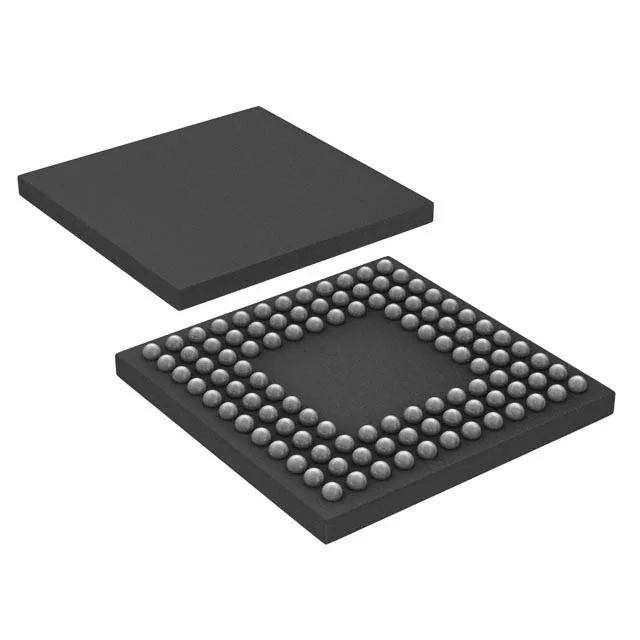
The 108-LFBGA package (10x10 mm body) uses a 0.8 mm ball pitch. That is fine for a standard 4-layer PCB with via-in-pad if you tent the vias. A hot-air rework station with a bottom preheater set to 150°C handles the removal, but the 10x10 mm body heats up fast; keep the top nozzle temperature under 260°C on the profile.