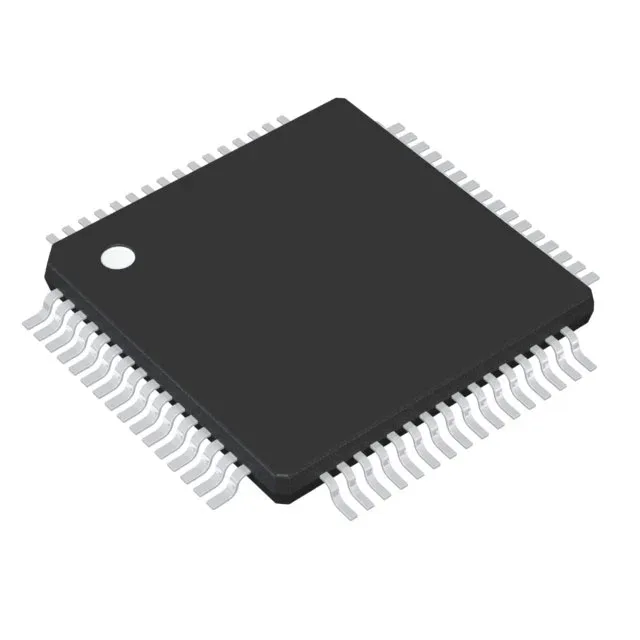
Texas Instruments LM3S1N16-IQR50-C3 — Microcontrollers & Processors (MCU / MPU / DSP)

Texas Instruments LM3S1N16-IQR50-C3 ARM Cortex-M3 MCU

MPNLM3S1N16-IQR50-C3
End of Life

Texas Instruments Stellaris ARM Cortex-M3S 1000 series LM3S1N16-IQR50-C3, 32-bit ARM Cortex-M3 MCU, 50 MHz, 64 KB Flash, 12 KB SRAM, 33 I/O, 64-LQFP, -40°C to 85°C.

$9.2200Ref. price · indicative, final on quote
Independent supplier — new & surplus stockAuthenticity-screened · ESD-safe packingListing updated Aug 2026

Specifications

LM3S1N16-IQR50-C3 specifications
ParameterValue
SeriesStellaris® ARM® Cortex®-M3S 1000
MountingSurface Mount
Oscillator typeInternal
Program memory typeFLASH
Voltage - supply (Vcc (Vdd))1.08V ~ 3.6V
Operating temperature-40°C ~ 85°C (TA)
Speed50MHz
RAM size12K x 8
Core size32-Bit Single-Core
PackageTray
PeripheralsBrown-out Detect/Reset, DMA, POR, PWM, WDT
ConnectivityI2C, IrDA, LINbus, Microwire, SPI, SSI, UART/USART
Number of i (O)33
Core processorARM® Cortex®-M3
Case64-LQFP
Data convertersA/D 8x10b
Program memory size64KB (64K x 8)

Product details

Flash and SRAM sizing — what fits

The 64 KB Flash suits bootloader-plus-application schemes typical in industrial sensors and motor drives where field updates are handled via the internal boot ROM.

64-LQFP — rework-friendly footprint

No underfill required, and a good hot-air station can lift and replace the part without damaging the board.

That means no last-time-buy deadline, no forced redesign for a replacement.

Frequently asked questions

Is LM3S1N16-IQR50-C3 obsolete?

No — the lifecycle record lists this part as active.

What is the replacement for LM3S1N16-IQR50-C3?

No official replacement part number is recorded in the lifecycle data. Because the part is still active, no direct substitute is needed — the same order code continues to be the correct procurement target.

What connectivity interfaces does this MCU support?

The LM3S1N16-IQR50-C3 includes I2C, IrDA, LINbus, Microwire, SPI, SSI, and UART/USART interfaces. This set covers common sensor buses, serial communication with peripherals, and LIN for automotive subnets — no external bridge chips needed for most industrial or automotive control applications.