50 MHz Cortex-M3 with 64 KB flash — what fits in that memory map
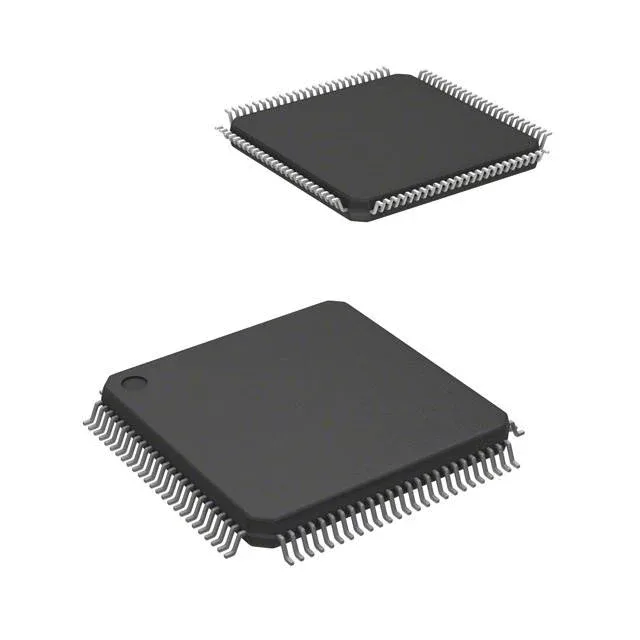
The LM3S1N11-IQC50-C1T is a Stellaris® ARM® Cortex®-M3S 1000 series MCU from Texas Instruments, running a 32-bit single-core Cortex-M3 at 50 MHz. On-chip memory is 64 KB of flash and 12 KB of SRAM — enough for a modest RTOS kernel, a USB stack, and one or two protocol stacks (say, a CANopen node or a Modbus RTU slave) before the linker starts complaining about.bss overflow. The 67 GPIOs come out to a 100-LQFP package (14x14 mm body). That pin count gives you room for a parallel LCD data bus, a row-column keypad matrix, and still leaves a dozen lines for sensor interrupts and status LEDs.
Industrial temperature grade and supply range — where this MCU survives
The internal oscillator eliminates the external crystal for most applications — the clock tree starts up in a few hundred microseconds, and the PLL locks to 50 MHz without a separate 8 MHz can. If you need tighter timing for CAN or USB, the peripheral set includes an external oscillator input.
Peripherals and connectivity — what the on-chip blocks actually do
The connectivity block covers I²C, SPI, SSI, UART/USART, LIN, IrDA, and Microwire — enough to talk to a temperature sensor over I²C, a motor encoder over SPI, and a host controller over UART simultaneously. The 8-channel 10-bit ADC samples at rates suitable for reading potentiometers, current-sense resistors, or thermistor dividers — not fast enough for audio, but adequate for feedback loops in a brushed DC motor controller. On-chip peripherals include a brown-out detect/reset (BOD), power-on reset (POR), a watchdog timer (WDT), a PWM module, and a DMA controller. The DMA can move ADC results to SRAM without CPU intervention — useful when the core is busy servicing a UART interrupt at 115200 baud.
Obsolete — what that means for your BOM line
Texas Instruments has marked the LM3S1N11-IQC50-C1T as obsolete. The Stellaris family was migrated to the Tiva C series years ago, but the pinout and register map differ — a board spin is required to use a Tiva part. Quantities are lot-specific and confirmed at RFQ time.