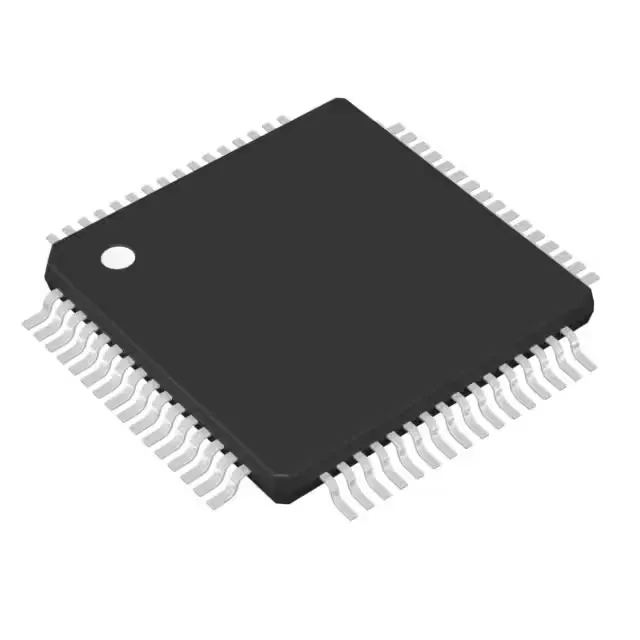
Texas Instruments LM3S1D26-IQR80-A2 — Microcontrollers & Processors (MCU / MPU / DSP)

LM3S1D26-IQR80-A2 Texas Instruments ARM Cortex-M3 MCU, 80MHz

MPNLM3S1D26-IQR80-A2
Obsolete

Texas Instruments Stellaris® ARM® Cortex®-M3S 1000 series microcontroller, LM3S1D26-IQR80-A2, 80MHz, 512KB flash, 96KB RAM, 64-LQFP, -40°C to 85°C.

Sourced new & surplus through independent channelsAuthenticity-screened · ESD-safe packingListing updated Jul 2026

Specifications

LM3S1D26-IQR80-A2 specifications
ParameterValue
SeriesStellaris® ARM® Cortex®-M3S 1000
MountingSurface Mount
Oscillator typeInternal
Program memory typeFLASH
Voltage - supply (Vcc (Vdd))1.235V ~ 1.365V
Operating temperature-40°C~85°C(TA)
Speed80MHz
PackageTray
RAM size96K x 8
Core size32-Bit Single-Core
PeripheralsBrown-out Detect/Reset, DMA, POR, PWM, WDT
ConnectivityI²C, IrDA, LINbus, Microwire, SPI, SSI, UART/USART
Number of i (O)33
Core processorARM® Cortex®-M3
Case64-LQFP
Data convertersA/D 8x12b
Program memory size512KB (512K x 8)

Product details

80 MHz Cortex-M3 — memory budget and peripheral set

The LM3S1D26-IQR80-A2 is a 32-bit single-core ARM Cortex-M3 MCU clocked at 80 MHz from the Stellaris series. On-chip memory breaks down as 512 KB of flash for firmware and bootloader, plus 96 KB x 8 of SRAM for data buffers and stack — enough for a modest RTOS with a few protocol stacks. Peripheral integration includes DMA, PWM, WDT, brown-out detect, and POR, which reduces the external supervisor and glue-logic count. Connectivity covers I²C, SPI, SSI, UART/USART, LIN, IrDA, and Microwire — the UART set alone handles multi-drop RS-485 or Modbus on a factory floor. The 8-channel 12-bit ADC brings analog measurement on-die; the internal oscillator saves the crystal BOM line for applications that tolerate ±1% accuracy over temperature.

Industrial-temperature qualification and supply voltage

An enclosure sitting on a hot factory floor or a rooftop telecom cabinet stays inside the operating envelope without active cooling. That demands a regulated rail — a standard 1.2 V LDO with ±2% tolerance sits inside the band; a 1.8 V rail fed through a divider does not. The I/O bank tolerance is not listed, but the narrow Vdd range is the tighter constraint for the board designer.

Texas Instruments has marked this part obsolete. For a BOM that requires this exact part number, the procurement path is spot-market sourcing. A board spin to a current Cortex-M4 or M0+ from the same package family is the long-term migration option.

64-LQFP footprint — board layout constraints

Housed in a 64-LQFP with a 10x10 mm body. The 0.50 mm pitch demands controlled impedance traces if any high-speed serial interfaces (SPI at 80 MHz) are routed to the edge — the peripheral set includes SSI and UART, so 2-layer boards are viable for low-speed I/O but 4-layer is safer for the core clock.

Frequently asked questions

What is the closest pin-compatible alternative to LM3S1D26-IQR80-A2?

The Stellaris family has largely migrated to the Tiva C series (TM4C123/129), which uses a different pinout and peripheral map — a board layout change is required.

What is LM3S1D26-IQR80-A2's core speed and memory?

80 MHz ARM Cortex-M3 core with 512 KB flash and 96 KB x 8 SRAM. The 80 MHz clock is the internal maximum — the flash wait-state controller adjusts automatically to keep zero-wait access at lower frequencies.

What compliance documentation does Texas Instruments provide for LM3S1D26-IQR80-A2?

No specific compliance documentation (RoHS, REACH, UL, IEC) is listed on the part record. TI typically provides RoHS and REACH declarations for active parts; for an obsolete part, the documentation is limited to what the original production batch carried.