50 MHz Cortex-M3 with 256 KB flash — what it means for a control board
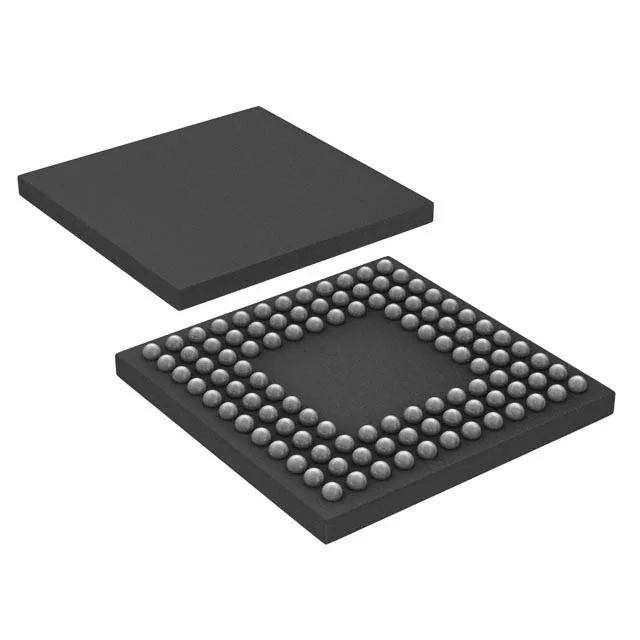
The LM3S1958-IBZ50-A2 is a Texas Instruments Stellaris ARM Cortex-M3S 1000 series MCU running at 50 MHz. That clock rate, paired with a single-cycle multiply and a 3-stage pipeline, handles real-time control loops — motor commutation, sensor polling, or protocol parsing — without an external DSP. On-chip memory: 256 KB of flash for firmware and 64 KB of SRAM for data buffers and stack. For a typical industrial sensor hub logging 10-bit ADC readings at 1 kHz, the SRAM holds several seconds of raw data before a flash write is needed. The 108-ball BGA (10x10 mm footprint) keeps the board area tight but demands a controlled reflow profile — the 0.80 mm ball pitch is manageable with standard SMT lines, though rework without a BGA station is impractical.
Peripheral set and supply rail — BOM-fit notes
52 general-purpose I/O lines give headroom for a mixed-signal board with parallel LCD data, keypad matrix, and status LEDs without needing a port expander. Connectivity covers I²C, SPI, SSI, UART, IrDA, and Microwire — enough to talk to external ADCs, FRAM, or a radio module on a single bus. On-chip peripherals include brown-out detect, POR, PWM, and a watchdog timer, reducing the external supervisor IC count. The internal oscillator saves a crystal for cost-sensitive builds where ±1% accuracy is acceptable. The 8-channel 10-bit ADC samples at up to 1 Msps — adequate for reading potentiometers, thermistors, or current-sense resistors in a motor-drive feedback path. The -40 to 85 °C industrial temperature grade suits outdoor enclosures, engine bays, or unheated factory floors.
Obsolete — what that means for procurement
For a BOM that already qualifies this MCU, the sourcing route is independent distribution — sealed reels with consistent date-codes are preferred over mixed-date auction lots.