What the 50 MHz core and 256 KB flash mean for a BOM line
The LM3S1918-IQC50-A2T: The ARM Cortex-M3 core runs at 50 MHz with a single-cycle multiply and hardware divide — the 1.25 MIPS/MHz throughput means the CPU delivers roughly 62.5 MIPS without the branch-penalty overhead of an older ARM7TDMI. The 256 KB on-chip flash is organized as 256K x 8, enough for a moderate control stack plus a bootloader, with the 64K x 8 SRAM leaving headroom for data buffers and the RTOS heap.
Lifecycle reality — NRND and what that means for procurement
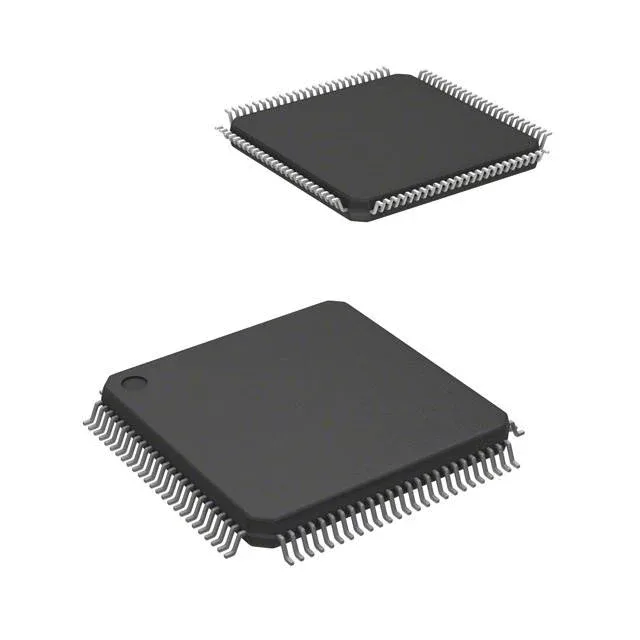
Texas Instruments lists the LM3S1918-IQC50-A2T as NRND (Not Recommended for New Designs). The part is still orderable for existing production, but TI has flagged it for end-of-life — no official last-time-buy date is published in this record, so the window for volume commitments is narrowing. New designs should migrate to a current Stellaris or Tiva-C series part with a compatible pinout and peripheral set. The 100-LQFP (14x14 mm) package footprint is standard across the Stellaris LM3S family, so a pin-compatible drop-in from the same series may exist — confirm the exact memory and peripheral map against the BOM before substituting.
52 general-purpose I/O lines are brought out, with the ADC inputs shared on Ports B and D. The internal brown-out detect and POR eliminate an external supervisor for most applications, but the WDT needs a service window in firmware to avoid spurious resets during long loops.
Connectivity and peripherals — what is on the bus
The IrDA module supports line-of-sight optical links up to 1 m at 115.2 kbaud. The 8-channel 10-bit ADC samples at up to 1 Msps (with the ADC clock derived from the system clock), adequate for current-sense or temperature feedback in a closed-loop control.