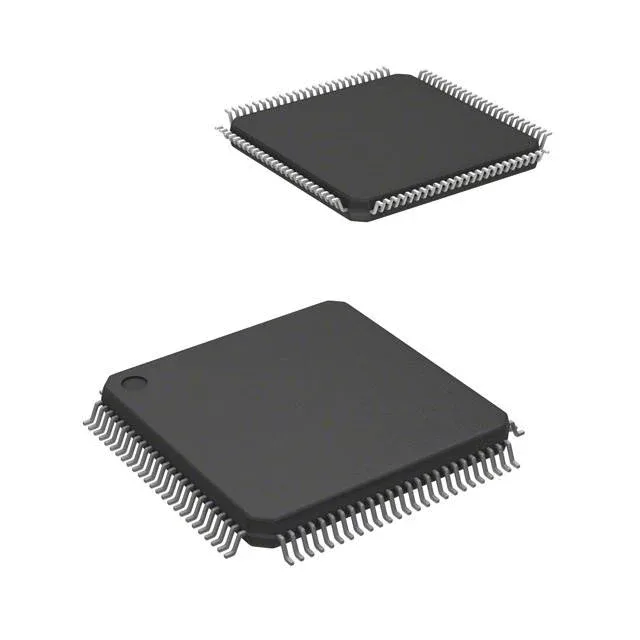
Core specs and what they mean for a BOM line
The LM3S1911-EQC50-A2T: On-chip memory: 256 KB of Flash (256K x 8) and 64K x 8 of SRAM. For a firmware image that fits in 256 KB, the 64 KB RAM leaves room for a moderate stack and data buffers — enough for a UART/I²C gateway or a sensor hub with a few hundred bytes of state. Operating temperature spans -40°C to 105°C — the industrial-plus band. A motor-drive controller or outdoor telemetry node that sees 85°C ambient still has 20°C of margin before the die hits the ceiling. The core and I/O share this single supply, so the regulator must hold within that window under load transients.
60 I/O lines are available in the 100-LQFP package — enough to interface a parallel LCD, a keypad matrix, and a few external ADCs without a port expander. Connectivity includes I²C, SPI, SSI, UART/USART, IrDA, and Microwire — covers the common serial buses for sensor and actuator interfaces. The SSI port can drive a synchronous serial ADC or DAC. On-chip peripherals: brown-out detect/reset, POR, PWM, and a watchdog timer. The brown-out reset protects against supply dips below the 2.25 V floor — useful in battery-backed or capacitor-fed applications.
Lifecycle reality and sourcing
Texas Instruments lists the LM3S1911-EQC50-A2T as obsolete. Sourced through independent distribution against an RFQ — availability and pricing confirmed at quote time. The 100-LQFP package (14x14 mm) is a standard footprint, so a board spin to a pin-compatible alternative would require a new layout if no direct drop-in exists.