Core architecture and memory budget
The LM3S1751-IQC50-A2: That puts it in the sweet spot for control-loop and protocol-handling tasks that need more throughput than a Cortex-M0 but don't require the DSP extensions of a Cortex-M4. On-chip memory is 128 KB of flash for program storage and 64 KB of SRAM for data. The 64 KB SRAM is generous for a Cortex-M3 at this price point — enough to hold a full TCP/IP stack buffer or a moderate data-logging array without external memory.
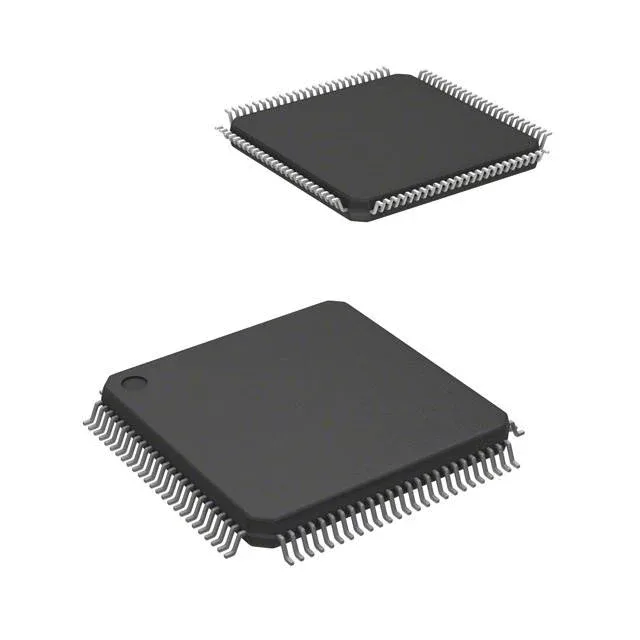
Serial interfaces include I²C, SPI, SSI, UART/USART, plus IrDA and Microwire — covering the common sensor, display, and memory protocols. The SSI port is useful for synchronous serial peripherals like ADCs or DACs that need a dedicated frame sync. A 4-channel 10-bit ADC is integrated, sufficient for reading analog sensors or potentiometers in a control panel. With 56 general-purpose I/O lines in a 100-LQFP package, the pinout leaves room for a parallel LCD bus or a memory-mapped FPGA interface alongside the serial peripherals.
Industrial temperature and supply rails
The 2.25 V to 2.75 V supply means the core runs from a 2.5 V rail — common in dual-supply systems where the I/O bank runs at 3.3 V through a separate regulator. Brown-out detection and POR are built in, so the reset circuit can be minimal.