The LM3S1635-EQC50-A2: This means the power rail must be regulated to within ±0.25 V of a nominal 2.5 V — a standard LDO or a 2.5 V output from a DC-DC converter works, but a 3.3 V rail with a diode drop will not. The 100-LQFP (14x14 mm) package has 100 pins with a 0.5 mm pitch; the exposed pad (if present on this variant) should be stitched to a solid ground plane with thermal vias for heat spreading at the 105°C end of the range.
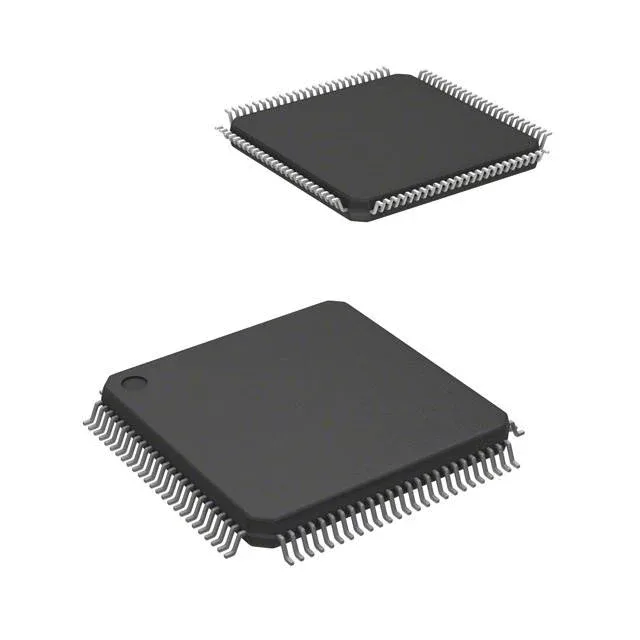
LM3S1635-EQC50-A2 Stellaris ARM Cortex-M3 MCU, 50 MHz
MPNLM3S1635-EQC50-A2
Obsolete
LM3S1635-EQC50-A2, Stellaris® ARM® Cortex®-M3S 1000 series, 32-Bit Single-Core MCU, 50MHz, 128KB Flash, 32K x 8 RAM, 56 I/O, 100-LQFP, -40°C~105°C, 2.25V~2.75V.
Sourced new & surplus through independent channelsAuthenticity-screened · ESD-safe packingListing updated Jul 2026
Specifications
| Parameter | Value |
|---|---|
| Series | Stellaris® ARM® Cortex®-M3S 1000 |
| Mounting | Surface Mount |
| Oscillator type | Internal |
| Program memory type | FLASH |
| Voltage - supply (Vcc (Vdd)) | 2.25V ~ 2.75V |
| Operating temperature | -40°C~105°C(TA) |
| Speed | 50MHz |
| Package | Tray |
| RAM size | 32K x 8 |
| Core size | 32-Bit Single-Core |
| Peripherals | Brown-out Detect/Reset, POR, PWM, WDT |
| Connectivity | I²C, IrDA, Microwire, SPI, SSI, UART/USART |
| Number of i (O) | 56 |
| Core processor | ARM® Cortex®-M3 |
| Case | 100-LQFP |
| Data converters | A/D 4x10b |
| Program memory size | 128KB (128K x 8) |
Product details
Frequently asked questions
What is the difference between LM3S1635 and LM3S1637?
The LM3S1637 offers a larger SRAM (48K x 8 vs 32K x 8) and a slightly different peripheral set compared to the LM3S1635, while sharing the same 100-LQFP package, 50 MHz Cortex-M3 core, and 128 KB Flash. The extra RAM in the LM3S1637 benefits buffered communication or larger data arrays, but the LM3S1635 remains sufficient for many control-loop and sensor-fusion tasks.