Cortex-M3 core with 50 MHz ceiling — what that means for the firmware engineer
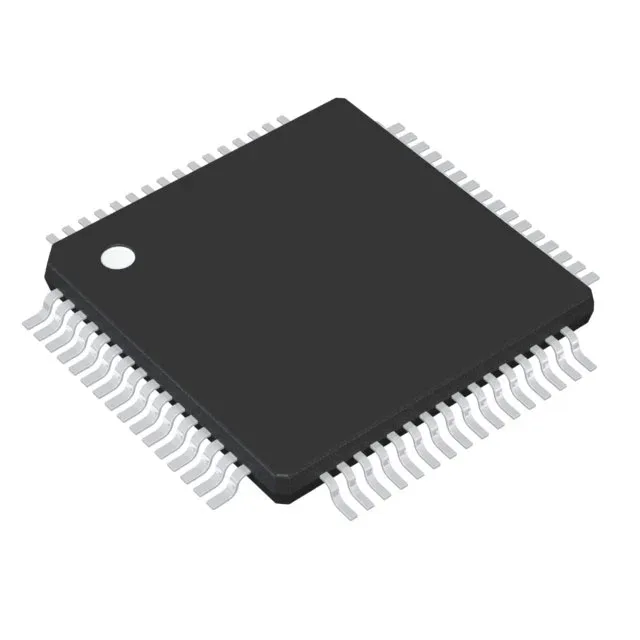
The LM3S1625-IQR50-A0T is a Stellaris® ARM® Cortex®-M3S 1000 series MCU from Texas Instruments, clocked at 50 MHz. That 50 MHz is the CPU clock ceiling — the flash controller keeps pace without wait states at this speed, so the 128 KB on-chip flash delivers single-cycle instruction fetches for most of the code footprint. The 32K x 8 SRAM (32 KB) leaves room for a moderate RTOS heap and stack. With the HAL and a lightweight kernel, expect about 20 KB free for application data structures.
NRND — plan the last-time-buy window
Texas Instruments lists this part as NRND (Not Recommended for New Designs). That means it is still orderable for existing production but TI will not invest in extended availability. For a kitting lead managing a BOM line that uses this MCU, the NRND flag triggers a last-time-buy (LTB) evaluation. If the build forecast extends beyond 12–18 months, secure the LTB quantity now through a quoted order — availability and pricing confirmed at RFQ.
Peripheral set and board integration
On-chip peripherals include brown-out detect/reset, DMA, POR, PWM, and a watchdog timer — enough for a motor-control or sensor-fusion node without an external supervisor IC. The 6-channel 10-bit ADC samples at rates adequate for low-speed feedback loops. Connectivity covers I²C, IrDA, Microwire, SPI, SSI, and UART/USART — the SPI and UART ports handle most sensor and display interfaces. 33 GPIOs are available in the 64-LQFP package. The 64-LQFP (10x10 mm) package with 0.5 mm pitch routes comfortably on a 2-layer board for the inner rows; a 4-layer stack-up simplifies fan-out for the full pin set.
Temperature grade and operating environment
This covers most factory-floor, outdoor telecom, and automotive-cabin applications — the internal oscillator is trimmed across this range, so no external crystal is needed for UART baud-rate generation.