50 MHz Cortex-M3 with 96 KB flash — what the memory and I/O mean for the BOM
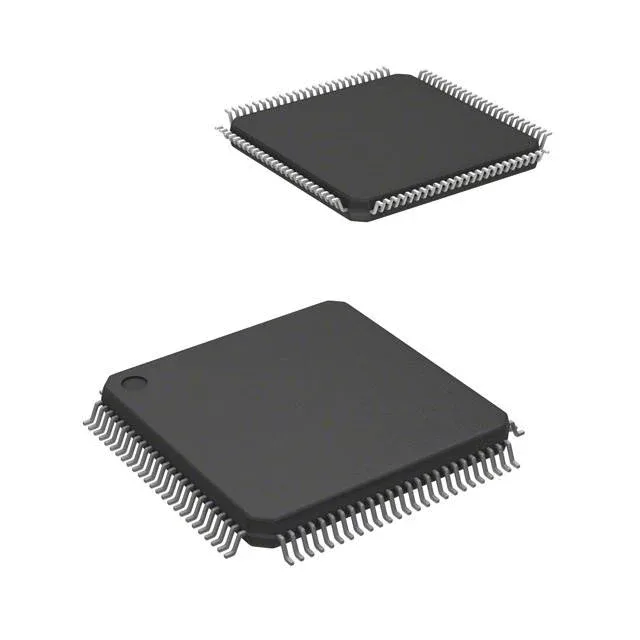
The LM3S1439-IQC50-A2T: The 96 KB on-chip flash and 32K x 8 SRAM give enough headroom for a modest control stack and a few hundred lines of application code — think motor commutation loops or sensor fusion algorithms that fit in a single flash sector. With 52 general-purpose I/O lines and connectivity including I²C, SPI, SSI, UART/USART, and IrDA, this part can talk to a range of peripherals without external level shifters or protocol bridges. The 4-channel 10-bit ADC covers basic analog sensing — enough for current feedback or temperature monitoring on a single-phase motor drive. The 100-LQFP package (14x14 mm) with 0.5 mm pitch demands a 4-layer PCB for reliable fan-out; two-layer boards will struggle to route all 52 I/O without via congestion.
NRND — what the lifecycle means for procurement
The 100-LQFP footprint and 2.5 V supply rail narrow the field of drop-in alternatives — a cross-reference search should start with other Stellaris LM3S parts in the same package and voltage grade.
Temperature grade and peripheral set — deployment context
The brown-out detect and POR circuits ensure clean startup on a 2.5 V rail that may ramp slowly in a battery-backed system. The peripheral set includes a PWM module and a quadrature encoder interface (QEI) — these map directly to brushless DC motor control with Hall-sensor or encoder feedback. The watchdog timer (WDT) provides a safety net for unattended operation, and the internal oscillator eliminates the crystal BOM line for cost-sensitive builds.