The built-in 2-channel 10-bit ADC handles basic analog sensing.
That does not mean it is instantly discontinued, but TI has flagged it as a mature product with no future development. New designs should look for a current-generation replacement.
The ARM Cortex-M3 core at 50 MHz is a solid mid-range performer for control-loop applications and protocol handling. It can handle a UART at 115.2 kbps with headroom, or run a PWM loop at several kilohertz without jitter. The 32-bit architecture and single-cycle multiply help with PID calculations and sensor fusion. For a BOM line, this is the tier that fits between 8-bit MCUs and high-end 120 MHz+ parts — enough for most industrial and IoT edge nodes without over-spending on a faster core you will not use.
The 32 KB SRAM gives room for data buffers and a modest heap. If your design needs OTA updates or a larger application, you will bump into the Flash ceiling; if you are logging sensor data or handling large communication packets, the SRAM may be tight. For a fixed-function controller (motor drive, simple HMI, protocol gateway), it is a comfortable fit.
108-ball BGA — rework and field reality
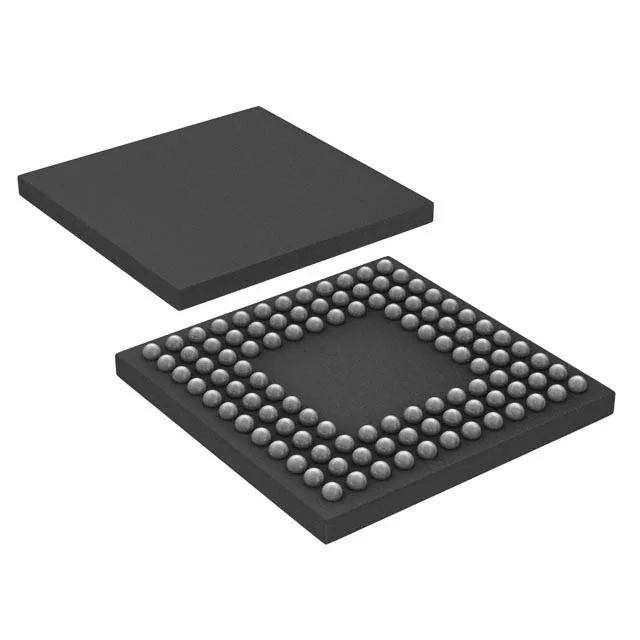
The 108-ball LFBGA (10x10 mm) is a fine-pitch BGA. That means no socket, no hand-solder field swap — you need a rework station with a hot-air nozzle and a stencil for reballing. Not a part you carry in a field kit for a parking-lot repair. If your application demands field-replaceability, consider a socketed or QFP variant in the same family. For factory-built boards with no planned field repair, the BGA saves board area and gives better thermal and electrical performance.