Core and memory — what this MCU brings to the BOM
The LM3S1162-IBZ50-A2: The 46 general-purpose I/O lines give you room for parallel interfaces, keypad scanning, or driving a small TFT display alongside the serial peripherals.
Peripherals and connectivity — what you can hook up
On the serial side, the part includes I²C, SPI, SSI, UART/USART, IrDA, and Microwire interfaces — covering most common sensor and actuator buses. The two 10-bit ADC channels handle analog inputs like potentiometers or current-sense resistors without an external converter. Built-in brown-out detect, POR, PWM, and watchdog timer reduce the need for external supervisory ICs. The internal oscillator saves a crystal on low-cost boards, though an external clock can be used for tighter timing.
Package and temperature — board-fit realities
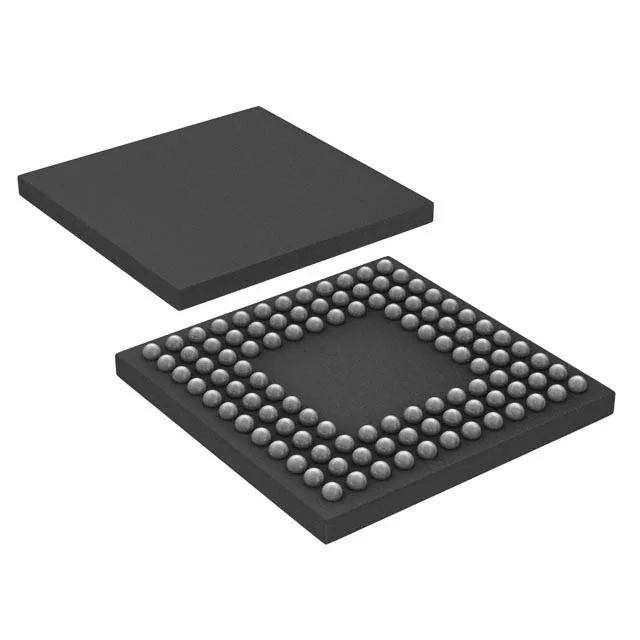
Housed in a 108-ball BGA (10x10 mm body), the LM3S1162-IBZ50-A2 requires a multi-layer PCB for fan-out — the 0.8 mm ball pitch is manageable with standard 4-layer stack-ups. The 32-bit single-core Cortex-M3 with Thumb-2 instruction set delivers good code density for the 64 KB Flash budget.
Lifecycle reality — NRND and what that means for procurement
Texas Instruments lists the LM3S1162-IBZ50-A2 as NRND (Not Recommended for New Designs). This means it is still available for existing production but is not intended for new projects — the Stellaris family has been superseded by TI's newer Tiva-C and other Cortex-M4 parts. For a BOM that already uses this MCU, we can source it against an RFQ through independent distribution channels. No official pin-compatible replacement is recorded from TI, so a board spin would be needed to migrate to a different part.