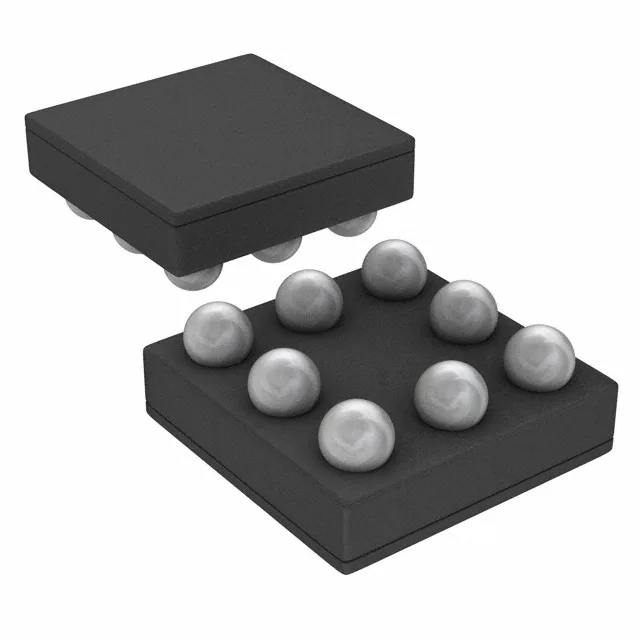
Dual comparator in a BGA — what the LM393TL brings to the board
It sinks up to 16 mA at 5 V through an open-collector output that interfaces directly with CMOS, TTL, or even ECL logic without a level translator. The wide supply range — 2 V to 36 V single, or ±1 V to ±18 V dual — means this comparator can run from a single lithium cell all the way up to a 24 V industrial rail without a regulator in between. Propagation delay is 700 ns max, so it is a good fit for DC threshold detection, overcurrent sensing, and slow edge-rate signal conditioning — not for high-speed PWM feedback or MHz-level zero-crossing.
700 ns delay and 2.5 mA quiescent — reading the timing budget
At 700 ns max propagation delay, the LM393TL responds about 3× slower than a typical 200 ns comparator. For a 10 kHz signal, that is a 0.7% phase shift — acceptable for most threshold monitors. Above 100 kHz the delay eats into the pulse width and the output may not reach full swing before the input transitions again. Quiescent current maxes at 2.5 mA per device — modest for a battery-powered sensor interface, but not the lowest-leakage choice for always-on monitoring. Input offset voltage is 5 mV max at 30 V supply. For a 50 mV threshold, that 5 mV offset eats 10% of the margin — budget for it in the resistor divider tolerance stack-up.
No automotive or industrial qualification. This comparator belongs in benchtop instruments, office equipment, appliance control boards, and similar climate-controlled environments. Do not spec it for an engine bay, outdoor enclosure, or factory floor where ambient can dip below freezing.
DSBGA footprint — layout and assembly considerations
The 8-DSBGA package measures roughly 1.5 mm × 1.5 mm with 0.5 mm ball pitch. X-ray inspection is recommended after reflow to confirm all eight balls wet.
New-production stock is no longer being manufactured; any available units are last-time-buy inventory or surplus from the independent channel. Because this part is obsolete, the only supply path is through independent distribution — broker-sourced, date-code verified, and quoted per order. Every unit we ship carries a traceable provenance check: date-code consistency against TI's factory markings, package inspection, and electrical sampling where the quantity justifies it.