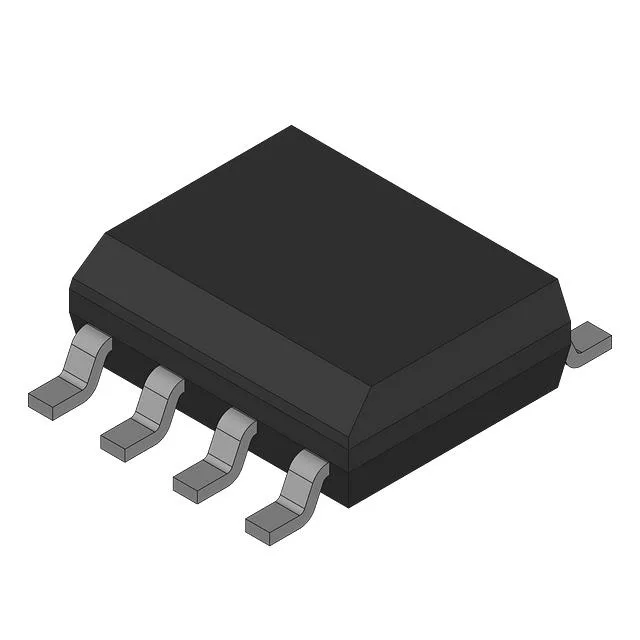
2.5 V fixed shunt — the tolerance and drift that set your error budget
The LM385BYM-2.5/NOPB is a precision 2.5 V shunt voltage reference from Texas Instruments, delivering a fixed output with ±1.5% initial tolerance and a 50 ppm/°C temperature coefficient. For a 0°C to 70°C span, that drift adds up to 3.5 mV of additional error — a figure the system designer must budget against the ADC or comparator threshold window. Output noise is specified at 120 µVrms over the 10 Hz to 10 kHz band, making this reference suitable for 12-bit and some 14-bit ADC applications where the noise floor sits below 1 LSB. The shunt architecture means the part regulates by shunting current away from the load — the series resistor sets the total current, and the 20 µA minimum cathode current defines the lower bound for stable operation.
Output current and bias — sizing the series resistor
The LM385BYM-2.5/NOPB can sink up to 20 mA of output current while maintaining regulation. The cathode current must stay above 20 µA for the reference to operate correctly — below that threshold the shunt loses its voltage-stiffness. In practice, the designer picks a series resistor that delivers (Vin – 2.5 V) / R such that the total current (load + 20 µA minimum) stays within the 20 mA ceiling across all load and line conditions.
For extended industrial or automotive environments, a wider-temperature sibling in the LM385 family would be needed.