LM358TPX/NOPB

Texas Instruments

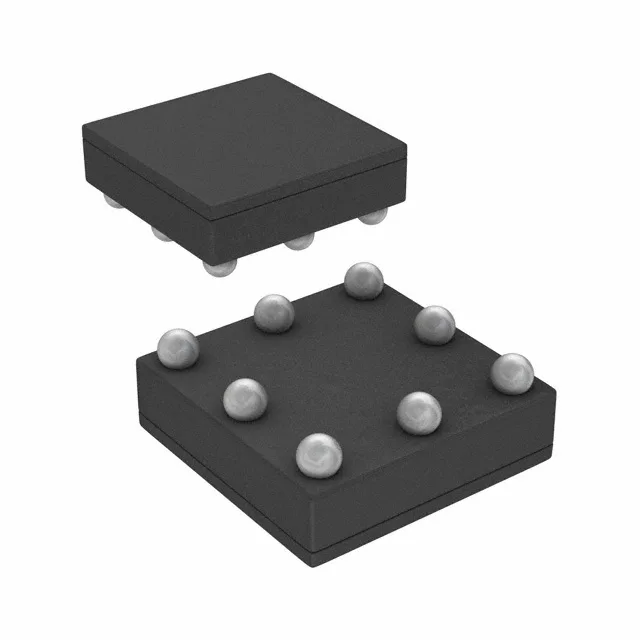
Texas Instruments LM358TPX/NOPB dual general-purpose op-amp, 1 MHz gain bandwidth, 3-32 V supply, 0-70°C, 8-DSBGA package, Tape & Reel.

Texas Instruments LM358TPX/NOPB
Download datasheet (PDF)
[IN STOCK] In Stock: 5 pcs
$2.46/ pc

Volume pricing

Buy Now

MOQ 1 · Tape & Reel (TR) Cut Tape (CT) · RoHS · EIA-481 · DAP/DDP · T/T

Technical specifications

LM358TPX/NOPB specifications
Parameter / AttributeSpecification / Value
MountingSurface Mount
Amplifier typeGeneral Purpose
Voltage - input offset2 mV
Voltage - supply span32 V
Current - supply1mA
Current - input bias45 nA
Current - output (Channel)40 mA
Operating temperature0°C ~ 70°C
Gain bandwidth product1 MHz
PackageTape & Reel (TR) Cut Tape (CT)
Case8-UFBGA, DSBGA
Number of circuits2
100% Footprint Match · Solder-Ready (No PCB Redesign Needed)

Need Stock or a Drop-in Second-Source for LM358TPX/NOPB?

Package: SOIC-14 / DIP-14 / TSSOP-14 · Pin-compatible replacements with immediate Shenzhen spot stock

Footprint Match 99%
Supply Chain & Allocation Reality:

The LM324 is the default quad op-amp of single-supply design: input common mode includes ground, output swings to near ground, and it runs from a 3V to 32V rail. It is one of the few analog parts in true continuous mass production across TI, ST, onsemi and every second-source fab, so availability is not the problem. The two real issues are picking the right grade for the rail (LM2902 caps at 26V, the B-suffix die at 36V, the LV family at 5.5V) and not treating the similarly-packaged LM339 quad comparator as a substitute - it is a different pinout and a different output stage.

Verified Pin-Compatible Replacements (4 verified alternatives)

LM2902 TI / onsemi / STMicroelectronics SOIC-14 / DIP-14
100% Drop-in (Zero Code Change)
Availability & Target Pricing:

Wide-Temperature Grade of the Same Amplifier

Shenzhen Spot Stock (24-48h Dispatch)

Electrical & Core Specs:

The LM324 die specified for the extended automotive/industrial temperature range (about -40 to +125 degC) with the supply capped at 26V instead of 32V.

3V to 26V single supply versus 3V to 32V on the LM324; same input and output swing behavior.

Compatibility & Drop-In Notes: The substitution to make when a design must keep working below 0 degC or above +70 degC and the original LM324 was only a commercial-grade part. Verify the 26V ceiling against the actual rail.
Package & Solder Footprint: Same SOIC-14 / DIP-14 pinout (OUT1=1, V+=4, GND=11, OUT4=14 pattern of the family - match the datasheet drawing).
Shenzhen Warehouse Stock & MOQ: Broad multi-fab stock; grades and temperature ranges documented on the datasheet.
LM324B Texas Instruments SOIC-14 / TSSOP-14
100% Drop-in (Zero Code Change)
Availability & Target Pricing:

Current-Generation Die at Commodity Pricing

Shenzhen Spot Stock (24-48h Dispatch)

Electrical & Core Specs:

The B-suffix redesign: supply rating raised to 36V, lower supply current, improved ESD structure, same functional behavior and pinout.

3V to 36V; same common-mode and output swing characteristics of the family.

Compatibility & Drop-In Notes: For new stocks and new builds this is the part to standardize on. In legacy circuits it behaves like the original LM324 within the original rail; the extra supply headroom only adds margin.
Package & Solder Footprint: SOIC-14 / TSSOP-14 pinouts follow the standard quad-op-amp arrangement - confirm against the vendor drawing before SMD placement.
Shenzhen Warehouse Stock & MOQ: Active TI production; the long-term safe buy for LM324 sockets.
LM324LV Texas Instruments SOIC-14
Pin-to-Pin (Minor Clock/Init Tuning)
Availability & Target Pricing:

Modern Low-Voltage Family Member

Shenzhen Spot Stock (24-48h Dispatch)

Electrical & Core Specs:

A new 2.7V to 5.5V low-voltage design in the same 14-pin footprint - rail-to-rail output, far faster than the original, but a different silicon.

2.7V to 5.5V only - it will be destroyed on a 12V or 24V rail that the LM324 handled.

Compatibility & Drop-In Notes: Only for 3.3V / 5V designs. In an existing LM324 socket powered from 12V or higher this part is the wrong direction entirely; in a new low-voltage design it is the modern replacement.
Package & Solder Footprint: SOIC-14 footprint matches the family; pinout per the LV datasheet.
Shenzhen Warehouse Stock & MOQ: Active TI line; stocked for new low-voltage builds.
LM358 Texas Instruments / onsemi SOIC-8 / DIP-8
Functional Equivalent
Availability & Target Pricing:

Same Die, Two Channels - Not a Same-Socket Part

Shenzhen Spot Stock (24-48h Dispatch)

Electrical & Core Specs:

The dual version of the same single-supply amplifier: identical electrical behavior per channel, in an 8-pin body.

3V to 32V (same family behavior); one output per channel less than the quad.

Compatibility & Drop-In Notes: The classic pairing question: LM358 and LM324 differ in channel count and package, not in amplifier behavior. Two LM358s on an adapter are never a clean LM324 replacement - use the correct package.
Package & Solder Footprint: SOIC-8 / DIP-8 versus SOIC-14 / DIP-14 - a different footprint, listed here for the comparison, not as a socket substitute.
Shenzhen Warehouse Stock & MOQ: Deepest stock of the whole family; original factory reels and batch packaging.
Buyer & Quality Checklist for Sourcing Alternatives
  • Do not substitute the LM339 quad comparator for an LM324 (or the reverse): the 14-pin pinouts differ (on the LM324 the supply is V+ = pin 4 and GND = pin 11; on the LM339 V+ = pin 3 and GND = pin 12, with a different arrangement of inputs and outputs), the comparator output is open-collector and cannot source current, and a comparator is not internally compensated for unity-gain feedback.
  • Match the grade to the rail: LM2902 is a 26V part, the LM324B die is 36V, and LM324LV is a 5.5V part. Cross-fitting grades is the most common way to kill an otherwise correct substitution.
  • The family cannot pull its output all the way to the positive rail (about V+ minus 1.5V class) and shows crossover distortion when the output stage transitions while sinking current - fine for DC and control loops, a known compromise in audio paths.
  • Inputs work at ground (common mode includes V-) but not near V+: keep sensor front ends within the documented input range or the output phase-inverts.
  • When replacing a worn-out LM324 in a battery product with the LV family, check that every supply pin in the circuit is now on 5V - the LV part dies instantly on legacy 12V rails.
Frequently Asked Technical Questions

Q: What is the difference between LM358 and LM324?

A: Channel count and package: LM358 is the dual (SOIC-8 / DIP-8) and LM324 the quad (SOIC-14 / DIP-14) version of the same single-supply amplifier design. Electrically, one channel of each behaves the same way.

Q: Can I use an LM339 comparator instead of an LM324 op-amp?

A: No. Different pinout (supply on pin 3 versus pin 4), open-collector output that cannot source current, and no internal compensation for feedback operation. The two 14-pin chips look like cousins on a schematic and are not interchangeable.

Q: How do I choose between LM324, LM2902 and LM324B?

A: By rail and temperature: LM324 for 32V commercial use, LM2902 for wider temperature range at 26V, LM324B for new designs (36V, current die). LM324LV only for 3.3V / 5V designs built new.

Technical details

DSBGA package — what it changes for assembly and rework

The LM358TPX/NOPB is the 8-ball DSBGA (8-UFBGA, DSBGA) variant of the classic LM358 dual general-purpose op-amp. Instead of the familiar SOIC-8 or DIP-8, this part comes in a 0.50 mm pitch wafer-level chip-scale package — roughly the same footprint as the silicon itself. That means the PCB land pattern is a 4×2 array of 0.25 mm solder balls, and the part is intended for direct solder reflow with no underfill in most cases. The DSBGA package saves board area but demands tighter stencil aperture control and a reflow profile tuned for lead-free SAC305. Rework is possible with a hot-air nozzle sized to the 2.0 mm × 1.5 mm body, but the risk of adjacent ball bridging is higher than with a molded QFN.

Supply range and temperature — fit for commercial gear

Gain bandwidth is 1 MHz, input offset voltage 2 mV typical, input bias current 45 nA. These are the classic LM358 numbers: adequate for DC-coupled sensor buffers, active filters below 100 kHz, and comparator duties with pull-up.

The base product number is LM358, which covers a broad family of package and temperature variants. The TPX suffix specifically denotes the DSBGA package with Tape & Reel delivery. The /NOPB suffix confirms lead-free (RoHS-compliant) construction.

LM358TPX/NOPB
[ALLOC] verified
Quote