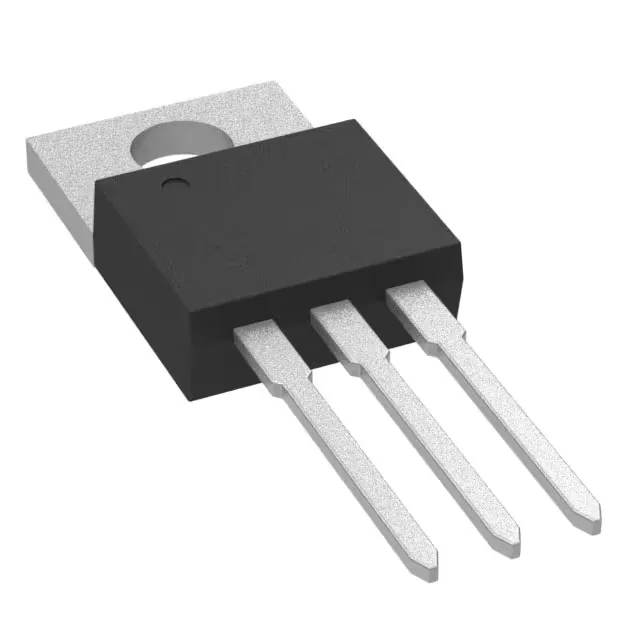
The Texas Instruments LM350AT/NOPB is a positive adjustable voltage regulator delivering up to 3 A continuous output. It replaces the need for a fixed-voltage part when the rail must be trimmed to a non-standard value or shared across multiple prototypes. Output voltage adjusts from 1.25 V to 33 V using two external resistors, covering the common 1.8 V, 2.5 V, 3.3 V, 5 V, 12 V, and 24 V rails from a single design. The 35 V maximum input gives 2 V of headroom at the top end. Built-in over-current, over-temperature, and short-circuit protection mean the regulator survives a sustained output fault without external crowbar or foldback circuitry — useful in benchtop supplies, motor-drive housekeeping rails, and industrial control boards where a fault won't be cleared immediately.
PSRR at 120 Hz — why it matters for post-regulation
The LM350AT/NOPB lists a power-supply rejection ratio of 86 dB to 65 dB at 120 Hz. That 86 dB floor at the line-frequency ripple peak means a 1 Vpp input ripple from a rectified mains supply is attenuated to under 50 µVpp at the output — important when the regulator feeds a sensitive analog front-end or a precision reference. The 65 dB figure at the high end of the band is still respectable; it keeps switching-regulator ripple in check if the LM350 is used as a post-regulator after a DC-DC converter.
Industrial temperature range and through-hole mounting
The TO-220-3 through-hole package (supplier device package TO-220-3) bolts to a heatsink or chassis for thermal management. The tab is the output pin — the heatsink pad must be electrically isolated or grounded per the output rail potential.