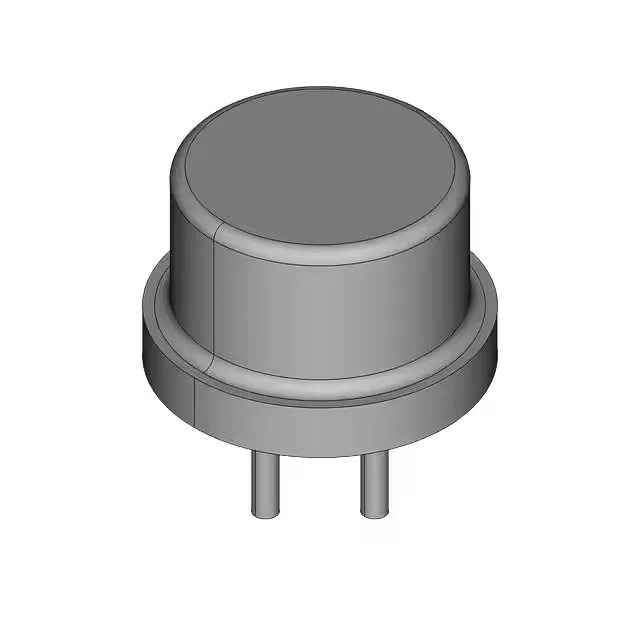
What the 10mV/°F output means for your circuit
The LM34DH outputs 10 mV for every degree Fahrenheit — at 77°F the output sits at 770 mV, no external scaling resistors needed. This is a direct-read Fahrenheit sensor: a 0°F reading gives 0 V output, and 212°F gives 2.12 V, so a microcontroller's ADC with a 2.5 V reference captures the full 32°F to 212°F range without amplification. The 4 V to 30 V supply range means it runs from a common 5 V logic rail or a 24 V industrial supply without a separate regulator. Quiescent current is low enough that self-heating stays under 0.2°F in still air.
The TO-46 metal can (TO-206AB) is a hermetic package — the case is welded steel with glass-to-metal seals on the leads. This matters for condensing environments or where the sensor sees thermal cycling: the hermetic seal prevents moisture ingress that would drift the output over time. Through-hole mounting with three leads (V+, Vout, GND). The metal can is electrically connected to the negative supply pin, so no separate ground wire is needed for the shield. The 0.100-inch lead spacing fits standard prototyping boards.
Accuracy and where it lands on the BOM
±3°F accuracy at 77°F (25°C) is the typical spec for the DH grade — this is the standard commercial accuracy tier. The sensor is trimmed at the factory; no external calibration is needed for most control and monitoring applications. The 32°F to 212°F sensing range covers the full liquid water temperature band — useful for HVAC duct sensing, water temperature monitoring, or food-service equipment where Fahrenheit readout is standard.