LM339DBR

Texas Instruments

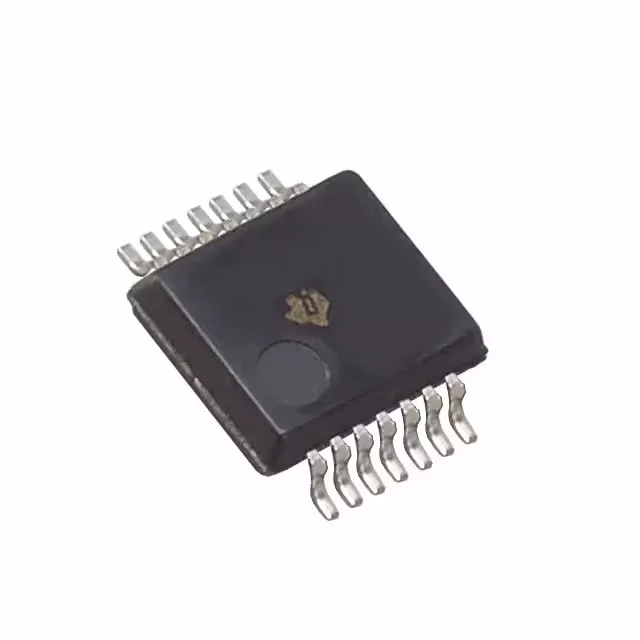
Texas Instruments LM339DBR, quad differential comparator, 14-SSOP package, 2V to 30V single/±1V to ±15V dual supply, 20mA typical output, 0°C to 70°C operating temperature.

Texas Instruments LM339DBR
Download datasheet (PDF)
[IN STOCK] In Stock: 71 pcs
$0.52/ pc

Volume pricing

Buy Now

MOQ 1 · Tape & Reel (TR); Cut Tape (CT) · RoHS · EIA-481 · DAP/DDP · T/T

Technical specifications

LM339DBR specifications
Parameter / AttributeSpecification / Value
TypeDifferential
Output typeCMOS, MOS, Open-Collector, TTL
MountingSurface Mount
Voltage - input offset5mV @ 30V
Voltage - supply, single (Dual (±))2V ~ 30V, ±1V ~ 15V
Output current20mA
Current - quiescent2.5mA
Current - input bias0.25µA @ 5V
Operating temperature0°C~70°C
PackageTape & Reel (TR); Cut Tape (CT)
Case14-SSOP (0.209\", 5.30mm Width)
Number of elements4
100% Footprint Match · Solder-Ready (No PCB Redesign Needed)

Need Stock or a Drop-in Second-Source for LM339DBR?

Package: DIP-14 / SOIC-14 · Pin-compatible replacements with immediate Shenzhen spot stock

Footprint Match 99%
Supply Chain & Allocation Reality:

The LM339 is the quad comparator - four open-collector channels in a 14-pin body, ground-sensing inputs, single-supply operation, and window/threshold duty in everything from battery chargers to appliance boards. The family is a temperature ladder wearing different numbers: LM139 military, LM239 industrial, LM339 commercial, LM2901 automotive-extended, all electrically identical and pin-identical, with the newer B-generation documented as a drop-in across the row. And the constant companion of this page is the part it is NOT: the LM324 quad op-amp, whose same-size 14-pin body has a different pinout and a linear output - the pair that every electronics course warns about and every parts drawer still manages to mix.

Verified Pin-Compatible Replacements (4 verified alternatives)

LM2901 TI / onsemi DIP-14 / SOIC-14
100% Drop-in (Zero Code Change)
Availability & Target Pricing:

The Wide-Temperature Grade of the Same Quad

Shenzhen Spot Stock (24-48h Dispatch)

Electrical & Core Specs:

The automotive/extended grade (-40 to +125C class) of the identical quad comparator: same channels, same open-collector outputs, same 14-pin map.

Wide single/dual supply (2V to 30V class); the grade moves temperature coverage, not function.

Compatibility & Drop-In Notes: The substitution direction here is free in both senses where the supply allows: grades are the same circuit over different temperature windows. In hot enclosures the commercial part in an extended-grade socket is the substitution that works at the bench and drifts in the field.
Package & Solder Footprint: Identical 14-pin pinout across every grade.
Shenzhen Warehouse Stock & MOQ: Deep multi-fab stock across the ladder.
LM339B Texas Instruments DIP-14 / SOIC-14
100% Drop-in (Zero Code Change)
Availability & Target Pricing:

The Current-Generation Drop-In

Shenzhen Spot Stock (24-48h Dispatch)

Electrical & Core Specs:

The B-generation: documented as a drop-in for the A and V versions with a higher supply ceiling (about 38V), better ESD structure, tighter offset (0.37mV class) and faster response (about 1us) on the same pinout.

38V-class maximum against the standard 30-36V window - margin added, nothing removed.

Compatibility & Drop-In Notes: For new stock and new builds the B is the part to standardize on; in legacy circuits it behaves like the original within the original rails. One review point remains the same as any comparator swap: the open-collector pull-up and any RC hysteresis network were sized for the original input characteristics.
Package & Solder Footprint: DIP-14 / SOIC-14, pin-identical.
Shenzhen Warehouse Stock & MOQ: Active TI production; the long-term buy.
LM393 TI / onsemi DIP-8
Functional Equivalent
Availability & Target Pricing:

The Dual Sibling - Same Core, Half the Channels

Shenzhen Spot Stock (24-48h Dispatch)

Electrical & Core Specs:

The dual (8-pin) member of the same comparator core: identical per-channel behavior, its own grade ladder (LM193/293/393/2903).

Same electrical envelope per channel.

Compatibility & Drop-In Notes: Listed for the map, not as a socket substitute: 8 pins against 14. Its practical role on this page is the reminder that channel count is the package - the comparator core is the family.
Package & Solder Footprint: DIP-8 against DIP-14.
Shenzhen Warehouse Stock & MOQ: Commodity stock; the everyday dual.
LM324 TI / STMicroelectronics DIP-14 / SOIC-14
Functional Equivalent
Availability & Target Pricing:

The Lookalike That Is Not - Documented Here

Shenzhen Spot Stock (24-48h Dispatch)

Electrical & Core Specs:

The quad OP-AMP in the same-size 14-pin family: linear push-pull output against the comparators open collector, and a different pin map (supply on pins 4 and 11 against the LM339s 3 and 12).

Same broad supply envelope, different roles.

Compatibility & Drop-In Notes: The trap this page exists to prevent: an LM324 slipped into an LM339 socket (or the reverse) fails on three axes at once - pinout, output topology and compensation. Comparators compare; op-amps amplify. The visual similarity of the 14-pin bodies is the entire hazard.
Package & Solder Footprint: Same body size, different pin functions: never a socket substitute in either direction.
Shenzhen Warehouse Stock & MOQ: The complementary stock row for mixed-signal repair.
Buyer & Quality Checklist for Sourcing Alternatives
  • Grades are temperature, not function: LM139/LM239/LM339/LM2901 are the same quad over military, industrial, commercial and extended windows. Substitutions across grades are electrically free - match the environment.
  • The B-generation (LM339B) is documented as a drop-in with a higher supply ceiling and tighter specs; there is no direction of substitution where the older part is preferred except exact-replacement documentation.
  • Open-collector outputs mean the pull-up resistor is the design: its value and its rail set the logic swing, the speed and the dissipation. Changing comparators without checking the pull-up is how edge-rate problems are born.
  • Ground-sensing inputs and a common-mode window that excludes the positive rail: sensor thresholds near the positive supply need a divider, not hope.
  • The LM324 warning runs in both directions: comparator sockets and op-amp sockets in 14-pin bodies are different worlds. Verify the part number letter by letter before insertion.
  • Hysteresis is external and intentional: in circuits that chatter near the threshold, the positive-feedback resistor is the fix - swapping comparators never removes the need for it.
Frequently Asked Technical Questions

Q: What is the difference between LM339 and LM2901?

A: Temperature grade only: LM339 is the commercial part, LM2901 covers the extended/automotive range. Same quad comparator, same 14-pin map, same open-collector outputs.

Q: Can I use an LM324 in place of an LM339?

A: No - and the failure is complete: different pinout (supply on 4/11 against 3/12), linear push-pull output against the comparators open collector, and internal compensation against none. The same-size body is the only shared property.

Q: Is LM339B a drop-in for LM339?

A: Yes - the B-generation is documented as a drop-in for the A and V versions, adding supply headroom (about 38V), better ESD and tighter offset on the same pinout. Re-check the pull-up and hysteresis network as with any comparator change.

Technical details

Four comparators, one SSOP-14 — what the supply range means for your rail

The LM339DBR is a quad differential comparator from Texas Instruments, packing four independent comparator channels into a 14-SSOP surface-mount package. Its supply range spans 2V to 30V in single-supply operation or ±1V to ±15V with dual rails, covering everything from 3.3V logic systems to 24V industrial sensor interfaces.

Output flexibility and bias — matching the downstream logic family

The output stage supports CMOS, MOS, open-collector, and TTL logic families, so the same comparator can drive a 5V TTL gate, an open-drain pull-up to 12V, or a CMOS input without extra level translation. Each output sinks up to 20mA typical, enough for small relays or indicator LEDs. Input bias current is 0.25µA maximum at 5V, and the input offset voltage is 5mV maximum at 30V. These ratings keep threshold errors low in precision window comparators and zero-crossing detectors where the reference voltage is set by a resistor divider. Quiescent current per package is 2.5mA maximum — modest for a quad device, but worth including in the power budget for battery-powered equipment running from a 3V or 5V rail.

For industrial or automotive environments requiring -40°C to 85°C or 125°C, look to the LM339 industrial-grade or AEC-Q100 qualified siblings in the same family.

LM339DBR
[ALLOC] verified
Quote