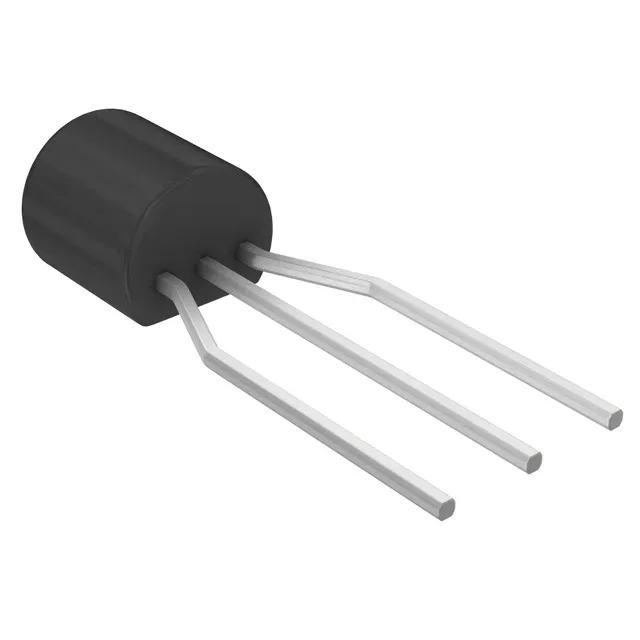
It is a shunt-type reference, meaning it operates like a precision Zener diode and requires an external cathode resistor to set the bias current. The ±4% tolerance on the 2.49V output is the headline spec for a calibration technician: at 25°C the output can sit anywhere from 2.3904V to 2.5896V. That spread is wide enough that you should measure the actual output of each part if your ADC reference or comparator threshold needs better than 4% absolute accuracy. The shunt current through the part is the sum of the load current plus the cathode current; size the cathode resistor to keep the total within the 10 mA ceiling across the full input voltage range.
For a BOM line, this means no forced redesign or lifetime-buy planning is needed now. The base product number is LM336; the LPRE3-2-5 suffix denotes the Tape & Reel option and the 2.5V output variant.
Where it fits — temperature range and typical use
This covers benchtop instruments, office equipment, and indoor industrial controls, but not automotive or outdoor telecom enclosures where the ambient exceeds 70°C. Common applications include providing a stable reference for A/D converters, comparator thresholds, or as a precision bias source in power supplies. The shunt topology is simple — two pins (cathode and anode) plus the external resistor — and the TO-92-3 package fits a breadboard or a small PCB footprint.