2.49V shunt reference — what it does in the circuit
As a shunt reference, it operates like a Zener diode: you set the bias current with an external series resistor from the supply, and the device sinks current to hold the output at 2.49V. The 10 mA output current rating and 400 µA minimum cathode current define the resistor value range for a given supply voltage.
Tolerance and temperature — fit for the accuracy budget
The ±4% initial tolerance means the output can sit anywhere from 2.390V to 2.590V at 25°C. For a 10-bit ADC with a 2.5V reference, that is about ±10 LSB of uncalibrated error — acceptable for many control and monitoring applications, but a tighter-grade reference (e.g., ±1% or ±0.5%) would be needed for measurement or instrumentation.
TO-92-3 package — breadboard and low-volume fit
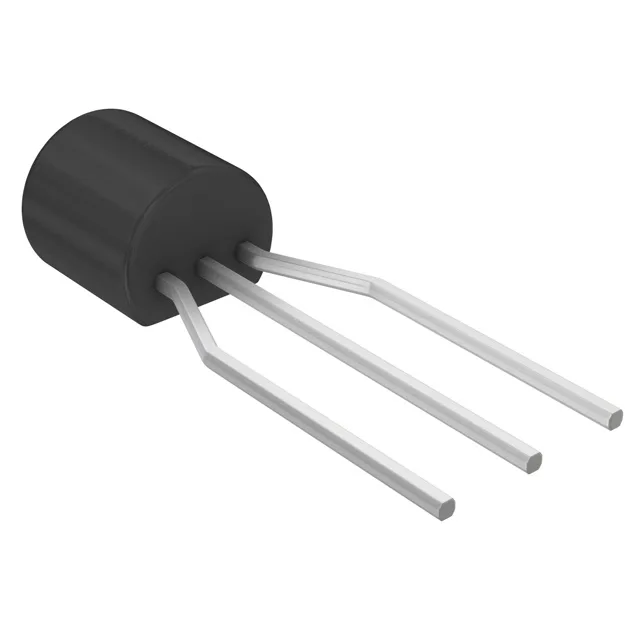
The TO-92-3 through-hole package with formed leads is a legacy form factor used in prototyping and low-volume production. The through-hole footprint is larger than SMD alternatives.