What the 10 mV/K output means for your ADC input
The LM335AH outputs 10 mV per degree Kelvin — at 25°C (298.15 K) the pin sits at 2.982 V. No external scaling resistor or linearisation lookup is needed; a 10-bit ADC with a 5 V reference reads about 2.98 V and the firmware subtracts 273.15 to get Celsius. Accuracy is specified as ±3°C at 25°C, widening to ±5°C across the full temperature window. For a production test limit, budget the wider ±5°C figure — the 25°C trim does not guarantee the same tolerance at -40°C or 100°C.
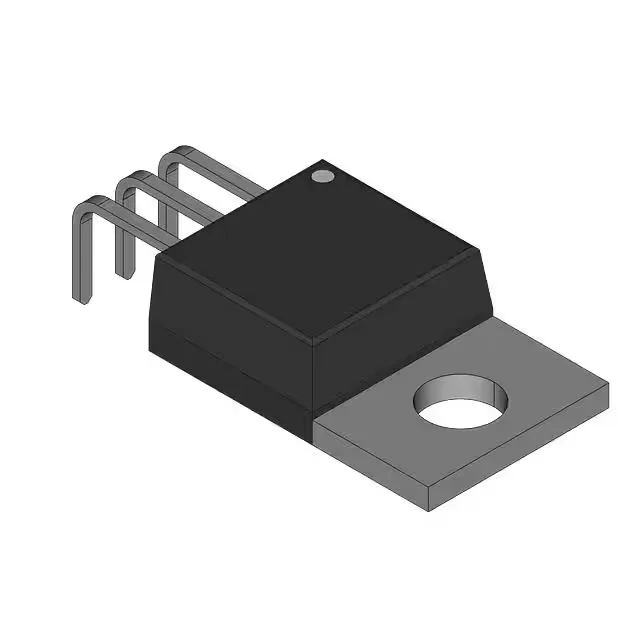
The TO-46 metal can (TO-206AB) is a three-lead through-hole package. The metal case is internally connected to the negative lead (ground) in most wiring configurations — the datasheet should confirm the pinout for your specific circuit. The hermetic seal makes it suitable for environments where moisture or outgassing would degrade a plastic-encapsulated sensor. Supplied in Bulk packaging — not tape-and-reel. For a small prototype run or a one-off board this is convenient; for a pick-and-place line running thousands, the tube or reel variant (LM335AZ / LM335Z) is the usual choice.
Lifecycle and compliance reality
New designs can use it without worrying about a last-time-buy window closing. RoHS non-compliant. The TO-46 can uses a glass-to-metal seal that typically contains lead oxide. If your BOM requires RoHS exemption 7(c)-I (lead in electronic ceramic parts) or you operate in a jurisdiction with full RoHS enforcement, verify acceptance before committing the line.