1.2 MHz GBWP and 3 V to 30 V rail — what this quad op-amp buys the design
The 3 V to 30 V single-supply range means it runs directly off a 24 V industrial rail or a 5 V logic supply without an intermediate regulator. That flexibility, combined with the 1.4 mA total quiescent current across all four amplifiers, makes it a workhorse for multi-channel boards where per-channel power budget matters.
Supply range and current — the BOM-fit numbers
The 3 V minimum supply span lets this part operate from a single lithium cell or a 3.3 V rail, while the 30 V maximum covers 24 V industrial buses with headroom for transients. The 1.4 mA supply current for all four channels works out to 350 µA per amplifier — low enough that a 24 V, 100 mA supply can feed dozens of these on a backplane without thermal issues. The 20 nA input bias current and 3 mV input offset voltage are typical for this class; they set the floor for DC accuracy in precision applications like strain-gauge bridges.
14-DIP package — rework and layout realities
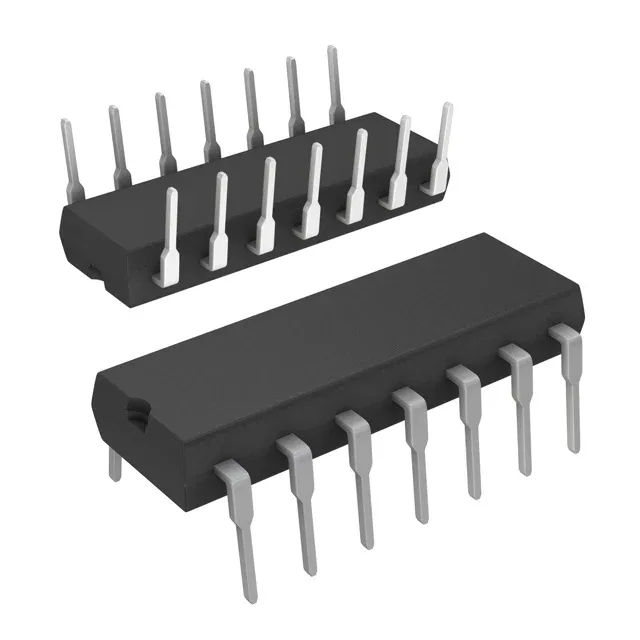
The 14-DIP (0.300-inch width, 7.62 mm) through-hole package is the most technician-friendly option in the LM324 family. The 0.100-inch pin pitch matches standard prototyping breadboards and perfboards, so this is the variant to pick for a proof-of-concept or a low-volume production run where hand-assembly is the plan. Through-hole means the part survives multiple rework cycles — desolder with a vacuum tool or solder wick, reinsert, reflow. No moisture sensitivity level to track; no bake-out required before soldering.
This is a low-risk BOM line for new designs as well as legacy support.