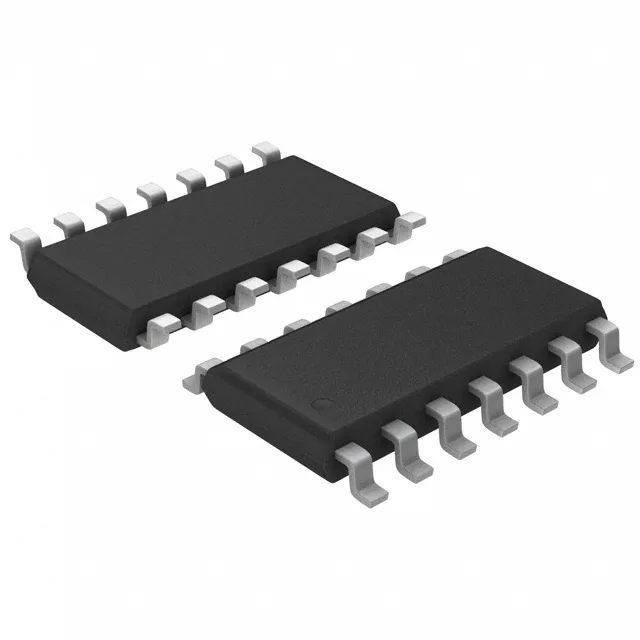
The LM324DG4: With a 1.2 MHz gain-bandwidth product and 0.5 V/µs slew rate, it covers the bulk of low-to-moderate-speed signal conditioning in industrial and consumer equipment.
At 0.5 V/µs, the full output swing of 20 Vpp (on a 30 V supply) is limited to roughly 8 kHz before slew-rate distortion sets in. For lower swings the usable frequency scales proportionally — a 2 Vpp signal can swing cleanly up to about 80 kHz. This makes the LM324DG4 a fit for sensor filtering, DC level shifting, and low-speed control loops, not for audio line drivers or high-speed ADC front ends.
20 nA input bias — DC accuracy trade-off
The 20 nA input bias current (typical) and 3 mV input offset voltage mean the DC accuracy is adequate for 1% resistor networks and 8-bit ADC interfaces, but the bias current will cause a voltage drop across high-impedance sources. If your feedback network uses 1 MΩ resistors, expect an additional 20 mV of offset — budget for it or scale the resistor values down.
Last-buy status — plan your final order
Procurement should commit the remaining BOM quantity now, because once the last-buy window closes, the only channel will be independent surplus.
Pin-compatible across the LM324 family
The LM324DG4 uses the standard quad op-amp pinout common to all LM324 devices in a 14-pin SOIC. Any other LM324 variant in the same 14-SOIC footprint — from TI or from a second-source manufacturer — will drop into the same board layout without a PCB change. The differences are in temperature grade, supply current, and lifecycle status, not pin assignment.