What the 100 mA rating means for your load
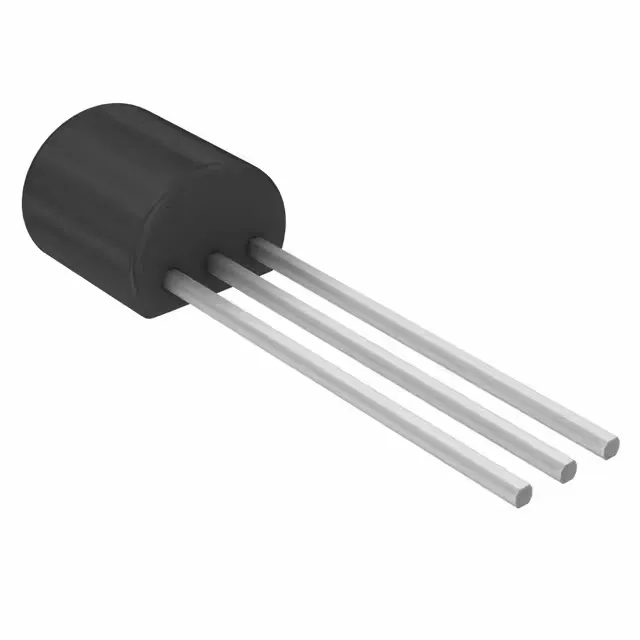
The LM317LCLP is a 100 mA adjustable positive linear regulator from the LM317 family, housed in a TO-92-3 through-hole package. The 100 mA continuous output sets the ceiling for your load — this is the part to pick for low-current analog rails, reference supplies, or bias voltages, not for powering a motor or a relay coil. The adjustable output from 1.2 V up to 32 V means a pair of external resistors sets the voltage; no fixed-voltage variant needed.
PSRR and noise rejection in the TO-92 body
PSRR is specified at 80 dB to 65 dB at 120 Hz — that 80 dB floor at line frequency is strong for a three-terminal regulator in a TO-92. It means the output ripple from a full-wave rectified supply is attenuated by a factor of 10,000 at the low end, which keeps downstream analog circuits clean. The drop to 65 dB at higher ripple frequencies is still respectable; if you need better rejection above 1 kHz, a post-filter LC stage or a lower-noise LDO would be the next step.
The TO-92-3 package is a through-hole footprint — easy to hand-solder, easy to replace on a board, and the three leads are clearly laid out: adjust, output, input.
Protection features for bench and field
Built-in over-current, over-temperature, and short-circuit protection mean the regulator survives a momentary output short or a load that exceeds 100 mA until the thermal limit kicks in. The quiescent current is 2.5 mA typical — that is the overhead the regulator burns just to run, so budget it in your supply rail calculation. Input voltage can go to 38 V maximum, giving headroom for unregulated supplies up to about 30 VDC.