60V input ceiling – the HVK differentiator
The 'HVK' suffix means the input can go to 60V max, compared to 40V on the standard LM317. That extra 20V headroom lets the regulator ride through unregulated 48V telecom rails or 48V nominal industrial buses without a pre-regulator. Output adjusts from 1.25V up to 57V, limited by the input-output differential. The 1.5A continuous output current is typical for powering analog front-ends, sensor supplies, or local post-regulation on a high-voltage rail.
PSRR and ripple rejection – what 80 dB means
PSRR is 80 dB typical at 120 Hz, dropping to 65 dB at higher frequencies. For a 60V rail with 1 Vpp of 120 Hz ripple, the output sees about 100 µVpp — clean enough for most 12-bit analog supplies.
TO-3 steel can – mounting and thermal path
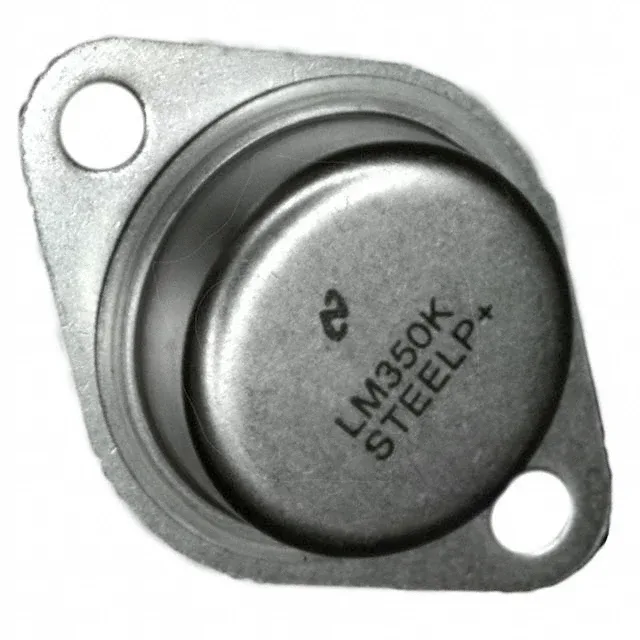
The TO-204AA (TO-3) steel package is a two-lead through-hole can with a metal tab that bolts directly to a heatsink. The tab is electrically connected to the output pin — use an insulating kit if the heatsink is chassis ground. The 12 mA quiescent current is typical for a three-terminal adjustable regulator at this current rating.
Protection features – over current, over temp, short circuit
Built-in over-current, over-temperature, and short-circuit protection are standard for the LM317 family. The regulator survives an output short indefinitely as long as the junction temperature stays below the thermal shutdown threshold.