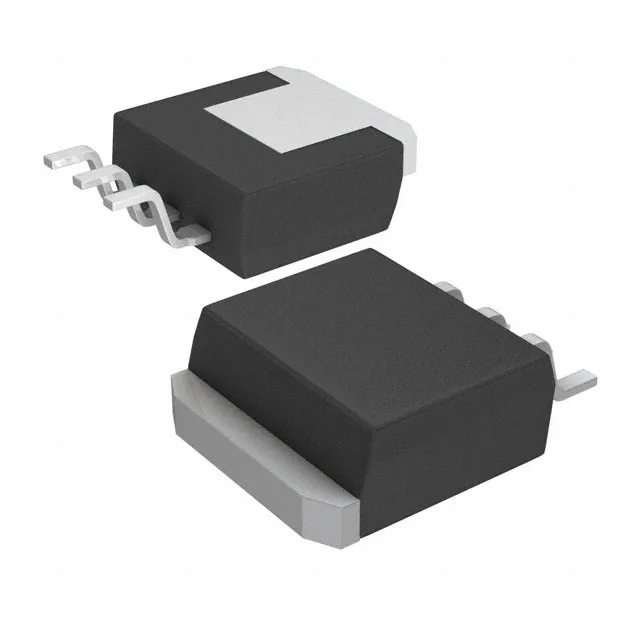
The LM2940SX-10: The 1 V dropout at full load means the input rail needs at least 11 V to maintain regulation; below that the output starts to sag. The 63 dB PSRR at 120 Hz is the ripple-rejection figure a designer checks against the power-supply noise budget — adequate for cleaning up a rectified mains rail feeding an analog front end or a sensor bias chain.
NRND — not for new designs, but still sourced for sustainment
This means Texas Instruments has flagged it for eventual end-of-life; new BOMs should not be qualified against it.
Industrial temperature range and protection set
The protection block includes over-current, over-temperature, reverse polarity, and short-circuit — the reverse-polarity clamp is a practical safeguard in battery-powered or field-wired systems where the input leads can be swapped.
TO-263 (D2PAK) — thermal pad and board layout
The TO-263-4 (D2PAK) package has three leads plus a large exposed tab on the bottom. The tab is the thermal path and is electrically common with the output. The quiescent current is 10 mA typical, rising to 15 mA max; that Iq is higher than a modern CMOS LDO, so in always-on or battery-backed rails the standing current matters.