Texas Instruments LM2940S-12/NOPB — Analog & Data Acquisition

LM2940S-12/NOPB 12V 1A LDO Regulator, TO-263, -40°C to 125°C

MPNLM2940S-12/NOPB
Active

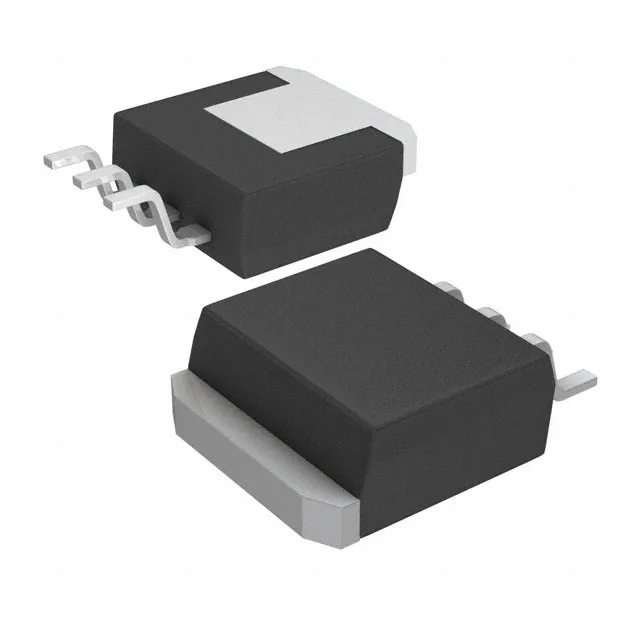
Texas Instruments LM2940S-12/NOPB, fixed 12V output LDO regulator, 1A output current, 66dB PSRR at 120Hz, TO-263-4 (D²Pak) surface-mount package, -40°C to 125°C operating temperature.

$2.9000Ref. price · indicative, final on quote
PackagingTO-263-4, D²Pak (3 Leads + Tab), TO-263AA
RoHSROHS3 Compliant
Independent supplier — new & surplus stockAuthenticity-screened · ESD-safe packingListing updated Aug 2026

Specifications

LM2940S-12/NOPB specifications
ParameterValue
Output typeFixed
MountingSurface Mount
Voltage - input26V
Voltage dropout1V @ 1A
Voltage - output (Min (Fixed))12V
Output current1A
Current - supply15 mA
Current - quiescent10 mA
Operating temperature-40°C~125°C
PSRR66dB (120Hz)
PackageTube
CaseTO-263-4, D²Pak (3 Leads + Tab), TO-263AA
Protection featuresOver Current, Over Temperature, Reverse Polarity, Short Circuit
Number of regulators1
Output configurationPositive

Product details

It comes in a TO-263-4 (D²Pak) surface-mount package with three leads plus the tab — the tab is the output and the primary heat path, so the PCB copper area under it determines how much current you can actually pull before hitting the thermal limit. The 1V max dropout at full load means you need at least 13V on the input to hold regulation; a 26V absolute maximum input gives headroom for 24V nominal rails with margin. The 66 dB PSRR at 120 Hz is useful when the input comes from a full-wave rectified bulk supply — it knocks down the 120 Hz ripple before it reaches the load. Protection is built in: over-current, over-temperature, reverse polarity, and short circuit. That reduces the need for external crowbar or clamp circuits on the output. Quiescent current runs 10 mA typical, 15 mA max — not a low-Iq part for battery standby, but acceptable for always-on industrial rails where the load current dominates.

Active lifecycle and RoHS compliance — no LTB pressure

The /NOPB suffix confirms RoHS3 compliance and lead-free construction, so it passes the usual EU and global material restrictions without an exemption. For a production BOM this means no forced redesign cycle from obsolescence.

Package and thermal — the tab is your heatsink

The large copper tab on the bottom carries the bulk of the dissipation. At 1A output with 13V input (1V dropout), the regulator dissipates roughly 1W — manageable with a modest copper pour on the PCB. At higher input voltages the dropout stays the same but the pass element sees the full Vin–Vout differential, so thermal design needs to account for the actual input rail, not just the dropout figure. The fixed 12V output needs no external resistor divider. The output capacitor should be a low-ESR electrolytic or tantalum in the 10 µF to 100 µF range for stability — the datasheet's recommended range, not the bare minimum. Ceramic caps with high DC bias derating can drop below the required capacitance at voltage, so check the effective capacitance at 12V.

Frequently asked questions

Where can I buy the LM2940S-12/NOPB and what is the price?

Submit a request for current pricing and lead time — no automated price is published here.

Does the LM2940S-12/NOPB have a lead-free / RoHS compliant option?

Yes, the /NOPB suffix indicates RoHS3 compliance and lead-free construction. No additional exemption documentation is needed for standard EU or global RoHS requirements.

What is the thermal performance of the LM2940S-12/NOPB under load?

At 1A output with 1V dropout the regulator dissipates about 1W. The TO-263 tab is the primary heat path; a copper pour on the PCB under the tab is needed to keep the junction below the 125°C maximum. At higher input voltages the dissipation increases linearly with the Vin–Vout differential.

How does the LM2940S-12/NOPB compare to the LM2940T-12?

The LM2940T-12 is the through-hole TO-220 version of the same regulator. The LM2940S-12/NOPB is the surface-mount TO-263 variant. Electrical specs (1A output, 12V fixed, 66dB PSRR, same protection features) are identical. The choice is purely a board-assembly decision — reflow vs. through-hole soldering.