12V rail from a 13-14V bus — the dropout margin
The LM2940CS-12 is a fixed 12V output positive LDO regulator from Texas Instruments, delivering up to 1A continuous current. Its 0.8V maximum dropout at full load means the input must stay above 12.8V to maintain regulation — a 13.2V nominal bus with 5% tolerance clears this, but a 12.6V rail during battery discharge will drop out.
PSRR is specified at 66 dB at 120 Hz, which attenuates full-wave-rectified ripple by a factor of 2000. For a 1 Vpp ripple on the input, the output sees about 500 µVpp — clean enough for a 12-bit ADC reference rail or an op-amp supply, but not for a sensitive PLL or RF VCO without post-filtering.
NRND — last-time-buy planning
This means TI has flagged it for eventual discontinuation — new designs should migrate to an active alternative. Existing production can still be sourced through independent distribution on a quoted-to-order basis, but the window for last-time-buy commitments is narrowing.
Protection set and temperature range
Built-in protection covers over-current, over-temperature, reverse polarity, and short-circuit conditions — reducing the need for external clamp diodes or foldback circuits in ruggedized designs.
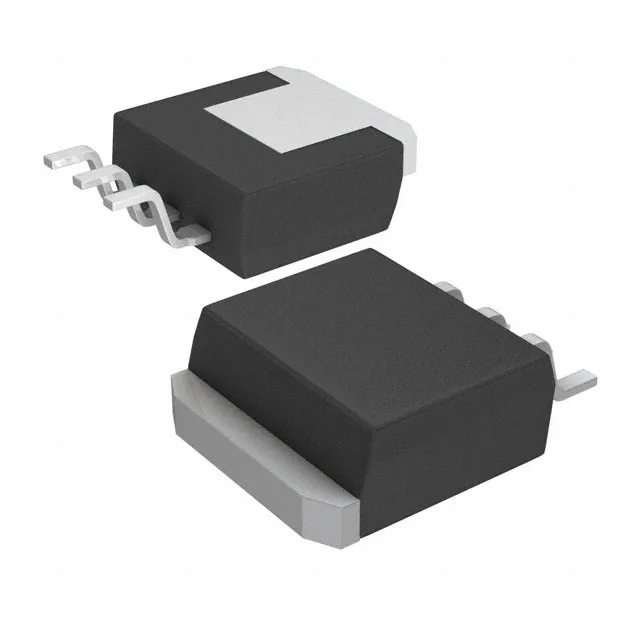
Package and footprint — DDPAK/TO-263
Housed in a DDPAK/TO-263-3 surface-mount package (TO-263-4 with 3 leads plus tab), the exposed tab must be soldered to a sufficient copper plane for thermal dissipation. At 1A with 2V dropout, the die dissipates 2W — a 1-inch-square copper pad on a 2-layer board keeps the junction below 125°C in still air.