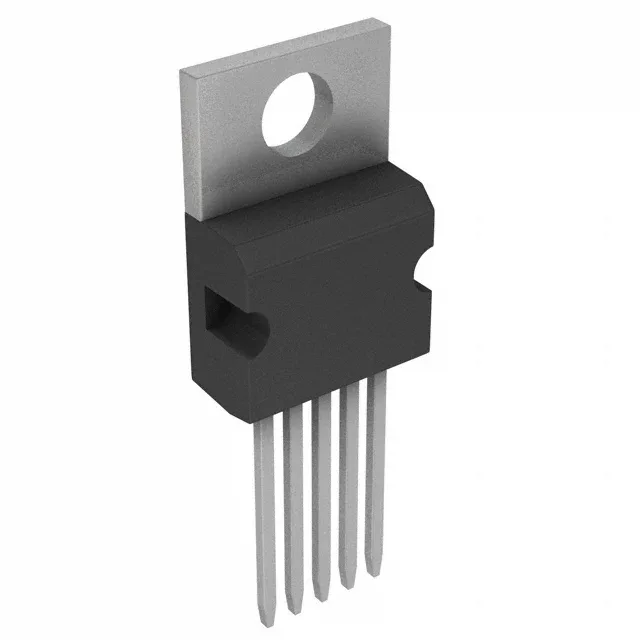
The LM2931CT/NOPB is a single-output adjustable positive LDO regulator from Texas Instruments, delivering up to 100 mA with a maximum dropout voltage of 0.3 V at full load. That dropout figure means the input rail needs to sit only 300 mV above the set output voltage — a 3.3 V output from a 3.6 V input is fine, but a 5 V output from a 5.0 V rail leaves no headroom. The output can be adjusted from a minimum of 3 V up to 24 V using an external resistor divider.
PSRR and protection — why this part holds up in noisy environments
Ripple rejection is rated at 55 dB at 120 Hz, which is the full-wave rectifier fundamental frequency. That knocks down 1 Vpp of input ripple to about 1.8 mVpp at the output — clean enough to feed a sensitive analog front-end or a small sensor bias. On top of that, the regulator includes over-temperature shutdown, reverse-polarity protection, and short-circuit current limiting, so it survives a miswired battery connection or a momentary output short without failing.
The TO-220-5 through-hole package has a metal tab that can be bolted to a heatsink or the chassis; the quiescent current is 1 mA typical, so self-heating is low, but at 100 mA output with a 5 V drop the dissipation reaches 0.5 W, and the tab keeps the junction below the thermal limit without forced air.