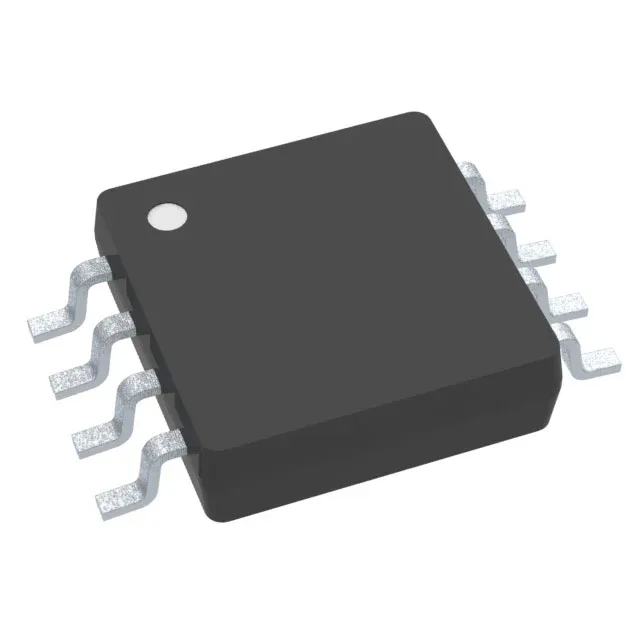
LM2903QDGKRQ1

Texas Instruments

Texas Instruments LM2903QDGKRQ1, dual differential comparator, AEC-Q100 qualified, 2V to 30V single supply, -40°C to 125°C, 8-VSSOP package, open-collector output.

Texas Instruments LM2903QDGKRQ1
Download datasheet (PDF)
[IN STOCK] In Stock: 7 pcs
$0.53/ pc

Volume pricing

Buy Now

MOQ 1 · Tape & Reel (TR); Cut Tape (CT) · RoHS · EIA-481 · DAP/DDP · T/T

Technical specifications

LM2903QDGKRQ1 specifications
Parameter / AttributeSpecification / Value
TypeDifferential
SeriesAutomotive, AEC-Q100
Output typeCMOS, MOS, Open-Collector, TTL
MountingSurface Mount
Voltage - input offset7mV @ 5V
Voltage - supply, single (Dual (±))2V ~ 30V, ±1V ~ 15V
Output current6mA @ 5V
Current - quiescent1mA
Current - input bias0.25µA @ 5V
Operating temperature-40°C~125°C
PackageTape & Reel (TR); Cut Tape (CT)
Case8-TSSOP, 8-MSOP (0.118\", 3.00mm Width)
Number of elements2
100% Footprint Match · Solder-Ready (No PCB Redesign Needed)

Need Stock or a Drop-in Second-Source for LM2903QDGKRQ1?

Package: DIP-8 / SOIC-8 · Pin-compatible replacements with immediate Shenzhen spot stock

Footprint Match 99%
Supply Chain & Allocation Reality:

The LM393 is the dual voltage comparator behind every threshold, window and alarm decision in instruments and industrial boards: 2V to 36V supply, ground-sensing inputs, open-collector outputs, and an 8-pin map that is identical to the LM358 op-amp pinout - the twin arrangement that makes socket-level swaps look possible and schematic-level swaps dangerous. Its family tree covers the whole repair shelf: temperature-grade siblings (LM193 / LM293 / LM2903 automotive) and the quad LM339 for four-channel boards. The two failure stories this page exists for: a comparator that stopped switching because the pull-up is missing, and an op-amp fitted into a comparator socket that saturates slowly and cannot wire-OR.

Verified Pin-Compatible Replacements (3 verified alternatives)

LM2903 TI / onsemi / STMicroelectronics DIP-8 / SOIC-8
100% Drop-in (Zero Code Change)
Availability & Target Pricing:

The Automotive Temperature Twin

Shenzhen Spot Stock (24-48h Dispatch)

Electrical & Core Specs:

The same dual comparator qualified across the wider temperature band - the 2903 grade covers the -40C class - electrically the same part, graded for industrial extremes and under-hood duty.

Same 2V to 36V envelope; open-collector outputs with the same sink capability.

Compatibility & Drop-In Notes: Direction rule: substituting upward in temperature grade is free; a commercial LM393 in a cold-environment board ends in drift complaints, not immediate failure - read the board temperature spec first.
Package & Solder Footprint: Identical 8-pin footprint.
Shenzhen Warehouse Stock & MOQ: Stocked across the grades; one quote covers the ladder.
LM339 TI / onsemi / STMicroelectronics DIP-14 / SOIC-14
Functional Equivalent
Availability & Target Pricing:

The Quad Sibling - Four Channels, Different Body

Shenzhen Spot Stock (24-48h Dispatch)

Electrical & Core Specs:

The same comparator core four times over in a 14-pin body: two channels wired in parallel match an LM393 function (open-collector outputs tie together happily), and the spare channels sit unused.

Same 2V to 36V class; the quad body moves the supply to pin 3 and ground to pin 12 - never the dual arrangement.

Compatibility & Drop-In Notes: The pinouts do not migrate: the LM393 carries V+ on 8 and GND on 4, the LM339 on 3 and 12. Both families are open-collector and microsecond-class - the differences are the body and the channel count.
Package & Solder Footprint: 14-pin; not a socket substitute for the 8-pin dual.
Shenzhen Warehouse Stock & MOQ: Stocked; the quad covers stranded-channel repairs.
LM358 TI / onsemi / STMicroelectronics DIP-8 / SOIC-8
Functional Equivalent
Availability & Target Pricing:

The Pinout Twin - A Different Species in the Socket

Shenzhen Spot Stock (24-48h Dispatch)

Electrical & Core Specs:

The op-amp that fits every hole: identical 8-pin map, push-pull output, internally compensated for linear duty - and functionally not a comparator.

3V to 32V, push-pull output limited to the supply rails.

Compatibility & Drop-In Notes: This card exists because the sockets are indistinguishable: if a repaired threshold circuit now responds late or drifts, check whether an op-amp replaced the comparator - and the reverse, a comparator in a feedback amplifier has no frequency compensation and oscillates.
Package & Solder Footprint: Same 8-pin footprint; only the schematic knows the difference.
Shenzhen Warehouse Stock & MOQ: Universal stock; match the device class to the circuit function.
Buyer & Quality Checklist for Sourcing Alternatives
  • The 8-pin map is shared: 1 out1, 2 in1-, 3 in1+, 4 GND, 5 in2+, 6 in2-, 7 out2, 8 V+ - on both the LM393 and the LM358. Nothing about the socket distinguishes a comparator from an op-amp; the schematic does.
  • Open-collector law: the LM393 output is a switch to ground and needs a pull-up (or a load) to a rail up to about 36V regardless of supply. A comparator that measures dead after repair is most often a missing pull-up or a pull-up to the wrong rail.
  • The reverse mistake is quieter: an LM393 - uncompensated, very high gain - fitted into a feedback amplifier oscillates; an LM358 fitted into a comparator node switches late and cannot drive wired-OR logic. Both pass a quick power-on test and fail the real one.
  • Temperature grades substitute freely upward (LM2903 into an LM393 socket) and carry a slow-drift risk downward - the -40C grade exists for reasons a cold warehouse finds its own way to.
  • Where the board needs a channel count the dual cannot give, the LM339 quad is the family answer - with a different 14-pin body (V+ on 3, GND on 12) that will not fit the 8-pin socket.
  • Input common mode includes ground across this whole family, which is why it dominates single-supply divider sensing: a sensing node that can swing below ground (inductive flyback, battery reversal) needs input protection, not just a substitution.
Frequently Asked Technical Questions

Q: What is the difference between the LM393 and the LM358?

A: Same 8-pin pinout, different device class: the LM393 is a dual comparator with open-collector outputs built for threshold decisions; the LM358 is a dual op-amp with a push-pull output internally compensated for linear amplification. The sockets are identical, the functions are not.

Q: Can I use an LM358 instead of an LM393 (or the reverse)?

A: Only after checking the circuit function. An op-amp in a comparator socket needs its output behavior - pull-up, wired-OR, speed - re-examined; a comparator in a linear feedback circuit has no compensation and will oscillate. If the node only needs a slow threshold, the op-amp can work; if it needs open-collector drive, nothing about the op-amp will.

Q: Why is my comparator output dead after replacement?

A: The LM393 output is open-collector: without a pull-up resistor or a load to a positive rail it reads low or floating with nothing to measure. Check the pull-up first, then the supply (2V to 36V) and the reference divider.

Technical details

AEC-Q100 dual comparator for automotive and industrial rails

The open-collector output stage (CMOS, MOS, TTL compatible) allows wired-OR connections and level shifting to higher-voltage logic families — a common requirement in automotive ECU fault monitoring and overvoltage detection circuits.

The 1mA maximum quiescent current keeps the thermal budget low even in densely populated modules. The 0.25µA input bias current at 5V minimises voltage drop across high-impedance source resistors.

Supplied in an 8-VSSOP package (3.00mm width, 0.118" pitch), the LM2903QDGKRQ1 is a surface-mount device that fits standard 8-pin TSSOP/MSOP land patterns. The supplier device package is 8-VSSOP; the alternate case codes are 8-TSSOP and 8-MSOP.

LM2903QDGKRQ1
[ALLOC] verified
Quote