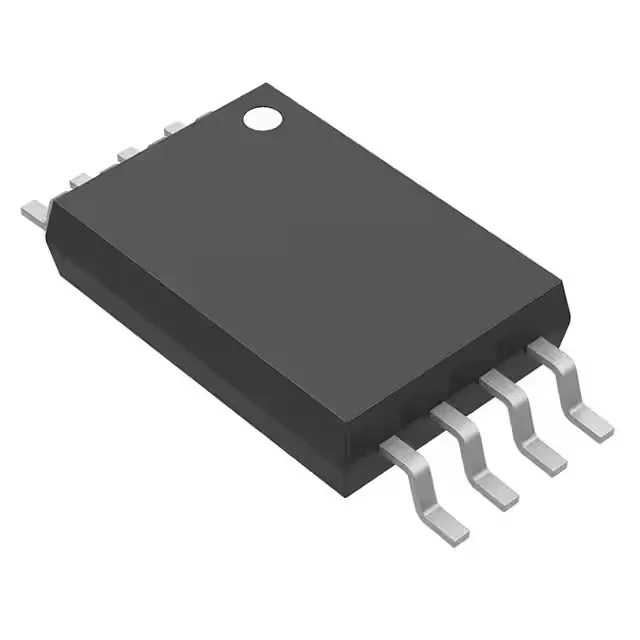
Dual differential comparator for industrial threshold detection
It compares two analog input voltages and outputs a digital logic level based on which input is higher, making it the standard building block for overvoltage/undervoltage detection, zero-crossing detectors, window comparators, and sensor threshold monitors in industrial control, motor drives, and automotive systems. The wide supply range from 2V to 36V (or ±1V to ±18V split supplies) lets it sit on the same rail as a 3.3V MCU or a 24V industrial bus without a separate regulator.
Output drive and open-drain flexibility
The output stage supports CMOS, MOS, open-drain, and TTL logic families — the open-drain configuration lets multiple comparator outputs wire-OR onto a single interrupt line. Maximum quiescent current is 2.5mA for both comparators combined, so the part adds under 3mA to the supply budget even when both channels are active. Input bias current maxes at 0.25µA at 5V — negligible loading on a high-impedance sensor divider or a precision reference.
Input offset and precision considerations
Maximum input offset voltage is 7mV at 30V supply. For a 0-10V sensor signal scaled to a 3.3V ADC range, that offset translates to about 0.2% of full scale — acceptable for overvoltage/undervoltage thresholds but not for precision measurement. If tighter offset is needed, the LM393 family (2mV max) is the usual upgrade path.
Lifecycle and supply continuity
The base product number LM2903 is a long-running industry-standard comparator family with broad second-source coverage.