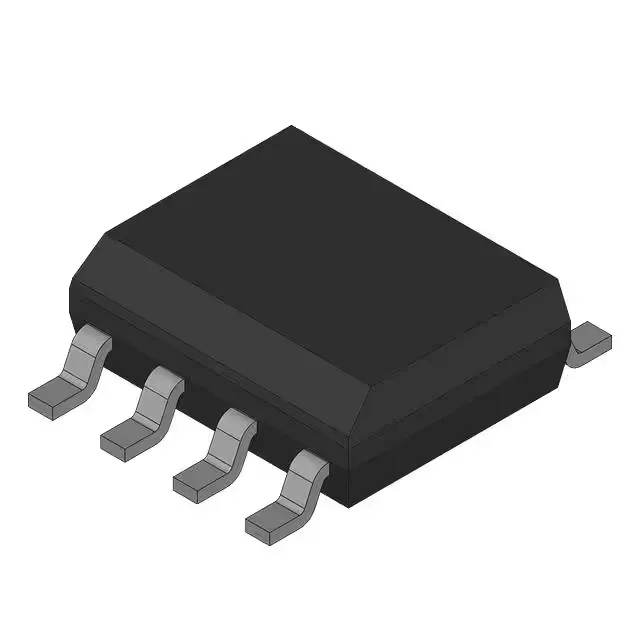
Dual comparator with a wide supply net
Its supply range of 2V to 36V on a single rail, or ±1V to ±18V split supplies, lets it sit on unregulated industrial buses or battery stacks without a local regulator. The open-collector output stage sinks up to 16 mA at 5V and interfaces directly with CMOS, TTL, DTL, ECL, or MOS logic — no level shifter needed between the comparator and the digital input.
Maximum input offset voltage is 7 mV at 30V supply. For a 5V threshold with a 100 mV hysteresis band, that 7 mV offset contributes about 7% uncertainty — acceptable for overvoltage/undervoltage detection but worth derating if you are sensing a 50 mV current-shunt drop. Maximum input bias current is 0.25 µA at 5V. In a high-impedance divider (say 1 MΩ total), that bias drops 0.25 V across the resistor — enough to shift the trip point. Keep the divider impedance below 100 kΩ to keep the bias error under 25 mV.
Quiescent draw and production status
Maximum quiescent current for both comparators is 1 mA. In a 24 V always-on industrial sensor, that is 24 mW — negligible for a bulk supply but a line item in a loop-powered 4-20 mA transmitter where the total budget is 3.5 mA.