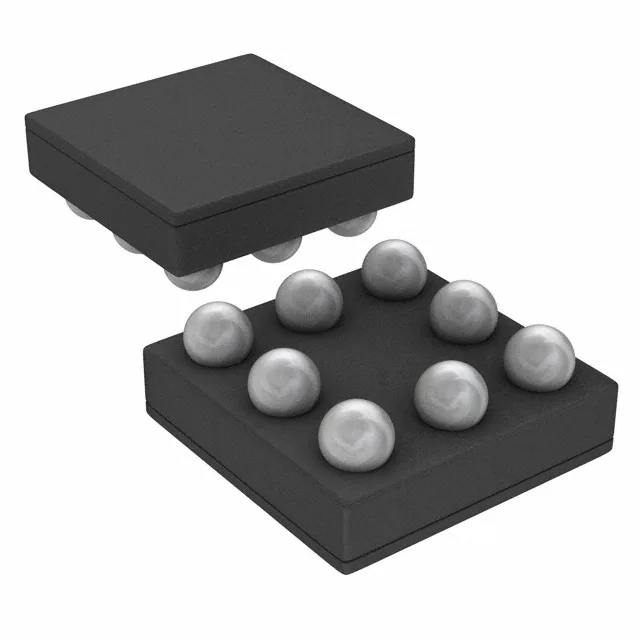
Dual comparator in a DSBGA-8 — what the package means for the board
The LM2903ITLX/NOPB is a general-purpose dual comparator from Texas Instruments, integrating two independent channels in an 8-DSBGA package. Supply range is 2V to 36V single or ±1V to ±18V dual.
700 ns propagation delay — timing budget for the loop
Maximum propagation delay of 700 ns sets the comparator's response floor. In a closed-loop control or overcurrent detection path, this delay adds directly to the loop latency; the designer budgets it against the system's fault-clearing time or PWM cycle period. The open-collector output stage sinks 16 mA at 5V and interfaces directly with CMOS, TTL, or ECL logic — no external level translator needed when the pull-up rail matches the downstream logic supply.
Quiescent current maxes at 2.5 mA for both comparators. In a battery-backed or always-on sensor node, that draw is the baseline before any output switching; the 0.25 µA input bias current (max at 5V) keeps the source impedance from loading the signal chain. For a threshold detection window narrower than that, an external offset-nulling resistor network or a precision comparator is the next step up the family.
For production planning, this part does not carry the obsolescence risk that drives a last-time-buy scramble. The DSBGA package is a wafer-level chip-scale format with an 8-DSBGA land pattern.