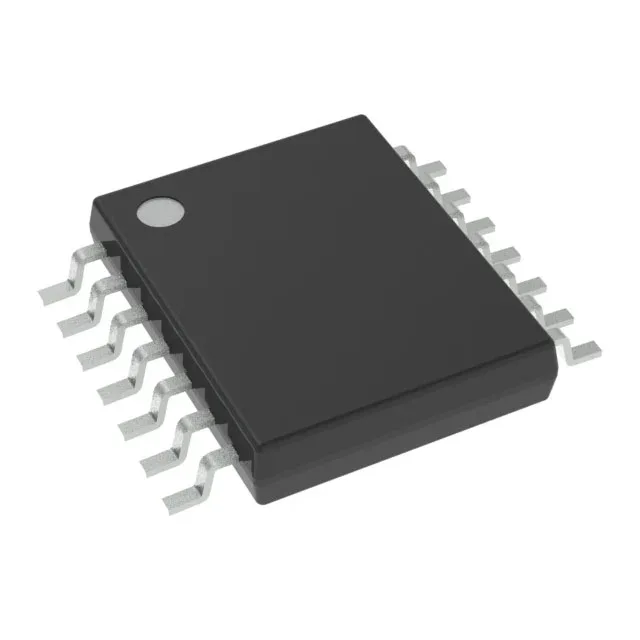
Texas Instruments LM2902MT/NOPB — Analog & Data Acquisition

LM2902MT/NOPB Texas Instruments LinCMOS Quad Op-Amp, 1 MHz

MPNLM2902MT/NOPB
Active

Texas Instruments LinCMOS series, LM2902MT/NOPB, quad general-purpose op-amp, 1 MHz gain-bandwidth, 1.5 mA supply, 3 V to 32 V supply range, -40°C to 85°C, 14-TSSOP.

$1.0203Ref. price · indicative, final on quote
Independent supplier — new & surplus stockAuthenticity-screened · ESD-safe packingListing updated Jul 2026

Specifications

LM2902MT/NOPB specifications
ParameterValue
SeriesLinCMOS™
MountingSurface Mount
Amplifier typeGeneral Purpose
Voltage - input offset2 mV
Voltage - supply span32 V
Current - supply1.5mA
Current - input bias45 nA
Current - output (Channel)40 mA
Operating temperature-40°C~85°C(TJ)
Gain bandwidth product1 MHz
PackageTube
Case14-TSSOP (0.173\", 4.40mm Width)
Number of circuits4

Product details

1 MHz GBW and 1.5 mA supply — the design trade-off

With a gain-bandwidth product of 1 MHz and a supply current of 1.5 mA across all four amplifiers, this part targets low-to-moderate frequency loops where power budget matters more than speed. The 45 nA input bias current and 2 mV input offset voltage are typical for a general-purpose CMOS stage — adequate for DC-coupled signals but not precision instrumentation.

40 mA output drive per channel

Each of the four amplifiers can source or sink 40 mA, enough to drive a downstream ADC input, a small relay coil through a transistor, or a 50-ohm line with moderate swing. The output stage is class-AB with no dead-zone crossover distortion typical of older bipolar quad amps.

Industrial temperature range, surface-mount package

Frequently asked questions

What is the difference between LM2902MT/NOPB and LM2902M?

The primary difference is the package: the LM2902MT/NOPB is in a 14-TSSOP surface-mount package, while the LM2902M typically comes in a 14-SOIC. Both are quad general-purpose op-amps with the same electrical specifications, so the choice is driven by PCB footprint and assembly process.