Input bias current is 15 pA typical, which is several orders of magnitude lower than the bipolar-input LM2902. That matters when the op-amp interfaces with high-impedance sensors (pH probes, photodiodes) where bias current flowing through the source resistance creates an offset voltage error. Input offset voltage is 1 mV typical — adequate for general-purpose signal conditioning but not precision instrumentation.
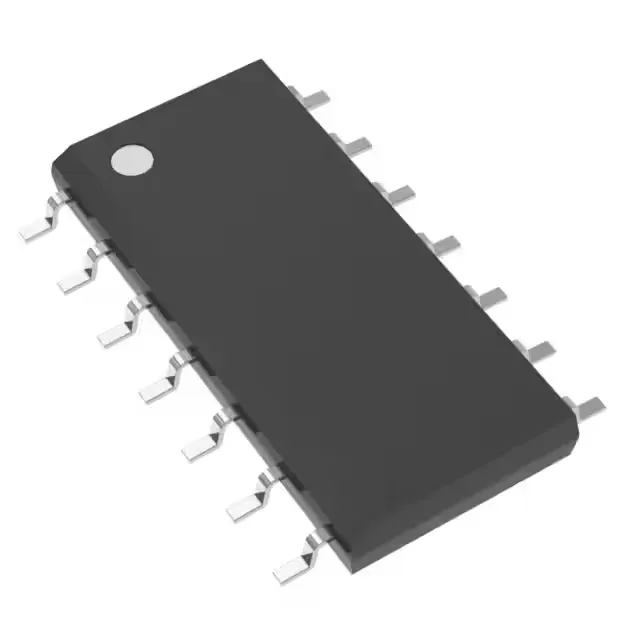
LM2902LVIDR Quad Op-Amp, 1 MHz GBW, 90 µA/Ch, -40°C to 125°C
MPNLM2902LVIDR
Active
Texas Instruments LM2902LVIDR, quad general-purpose op-amp, 1 MHz gain bandwidth, 1.5 V/µs slew rate, 90 µA supply per channel, 2.7 V to 5.5 V supply, -40°C to 125°C, 14-SOIC package.
$0.1035Ref. price · indicative, final on quote
Independent supplier — new & surplus stockAuthenticity-screened · ESD-safe packingListing updated Jul 2026
Specifications
| Parameter | Value |
|---|---|
| Mounting | Surface Mount |
| Amplifier type | General Purpose |
| Voltage - input offset | 1 mV |
| Voltage - supply span | 5.5 V |
| Current - supply | 90µA (x4 Channels) |
| Current - input bias | 15 pA |
| Current - output (Channel) | 40 mA |
| Operating temperature | -40°C~125°C(TA) |
| Gain bandwidth product | 1 MHz |
| Package | Tape & Reel (TR); Cut Tape (CT) |
| Slew rate | 1.5V/µs |
| Case | 14-SOIC (0.154\", 3.90mm Width) |
| Number of circuits | 4 |
Product details
Frequently asked questions
How does LM2902LVIDR compare to the standard LM2902?
The LM2902LVIDR is a pin-compatible, lower-power variant of the standard LM2902. The key difference is supply current: 90 µA per channel versus roughly 1 mA per channel for the standard part. The LM2902LVIDR also operates down to 2.7 V, whereas the standard LM2902 requires a minimum of 3 V. Gain-bandwidth and slew rate are similar between the two.