Buck controller with 50kHz–1MHz switching and synchronous rectification
The LM2743MTCX is a voltage-mode PWM buck controller from Texas Instruments, designed for step-down regulation with a transistor-driver output. It switches between 50kHz and 1MHz, with a maximum duty cycle of 80% — the upper frequency limit lets you shrink the output inductor and capacitor, while the lower end keeps switching losses down in noise-sensitive or lightly loaded rails. The synchronous rectifier improves efficiency by replacing the freewheeling diode with a low-Rds(on) FET — expect a few percentage points gain over an asynchronous design at the same output current, especially below 12 V out. The 3V to 6V Vcc supply rail means this controller runs from a 5V system rail or a 3.3V intermediate bus without an extra regulator. Control features include current limit, enable, frequency control, power good, soft start, and tracking. The tracking input lets the output voltage follow another rail during start-up — useful for sequencing core and I/O voltages in a multi-rail board where the load requires a monotonic ramp.
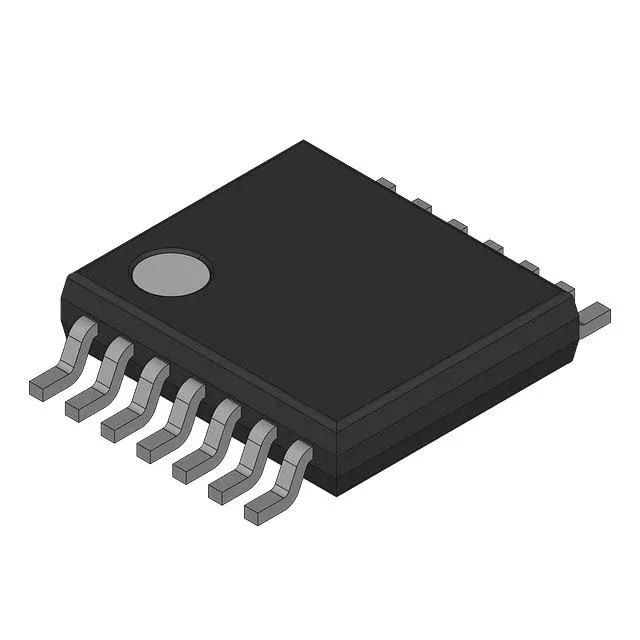
Housed in a 14-TSSOP (4.40mm width) surface-mount package, the LM2743MTCX fits a standard 0.65mm-pitch footprint. Packaged in Bulk — not tape-and-reel. For a prototype run or a low-volume build this saves the reel charge; for high-volume pick-and-place you will need to transfer to tape or order an alternative packaging option if TI offers one.
Cross-reference note — LM25117PMHX/NOPB
The LM25117PMHX/NOPB is a close functional peer — also a buck controller with synchronous rectification, single output, transistor-driver stage, and a -40°C to 125°C junction range. The main difference is supply voltage: the LM25117 runs from 4.5V minimum (vs 3V for the LM2743), so it will not work from a 3.3V rail. The LM25117 also lacks the tracking feature and has a fixed 750kHz switching frequency instead of the LM2743's adjustable 50kHz–1MHz range. A board laid out for the LM2743MTCX with a 5V or higher input rail could accept the LM25117 with a frequency-adjustment resistor change, but a 3.3V-input design cannot.