Active production — no last-time-buy scramble needed
The LM2675N-12/NOPB: ROHS3 compliant, so it passes EU and global regulatory gates without a waiver.
1 A, 40 V input, fixed 12 V — the parametric envelope
Rated for 1 A continuous output with a maximum input voltage of 40 V and a minimum input of 6.5 V. The output is fixed at 12 V — no external divider network needed, which saves two resistors and a feedback node on the PCB. Switching frequency is 260 kHz — a middle-of-the-road choice that keeps the inductor physically small without pushing into the EMI headaches of a 1 MHz+ switcher. The 260 kHz fundamental and its harmonics fall below most conducted-emission test start points (150 kHz), so the input filter design is straightforward. No synchronous rectifier — the freewheeling diode is external. That means slightly higher conduction loss at heavy load compared to a synchronous part, but it also means the regulator cannot shoot through and the BOM diode can be selected for the actual voltage and thermal profile.
8-DIP through-hole — legacy board fit and rework simplicity
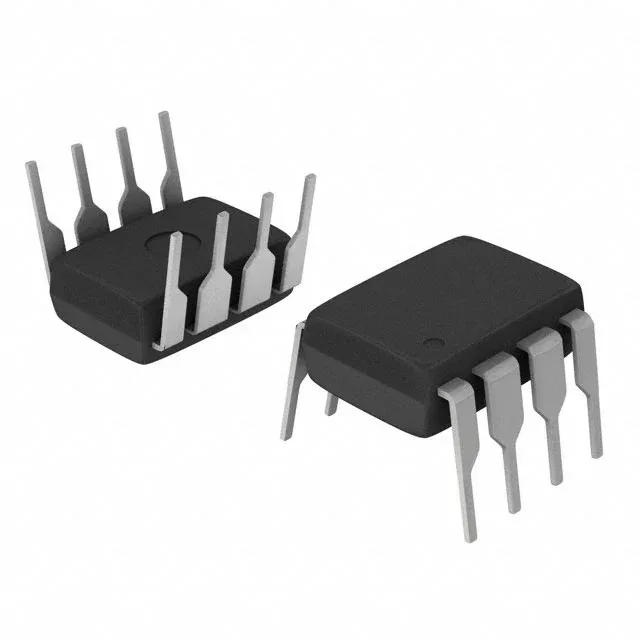
This is the classic DIP footprint — 0.100-inch pitch, 0.300-inch row spacing. No reflow oven needed; hand-solder or wave-solder in a single pass. The through-hole package means the part survives board rework cycles that would crack a QFN or BGA solder joint. For a repair bench or a low-volume production line, this is a practical advantage over surface-mount alternatives.
The 125°C junction limit is the absolute ceiling for the silicon — derate the output current above 85°C ambient per the datasheet's thermal derating curve (not reproduced here). In a 50°C ambient with still air, the 1 A rating is achievable; in a 105°C ambient, expect to drop to roughly 0.6 A.
SIMPLE SWITCHER series — mature ecosystem, known design flow
Part of the SIMPLE SWITCHER family, a long-running Texas Instruments series of integrated switching regulators with a standardized design methodology. The datasheet includes a nomograph for inductor selection, a layout example, and a bill of materials for a typical 12 V output application. The series is well-documented across application notes (AN-1137, AN-1197) and the WEBENCH design tool supports it — enter the input range and output voltage, and the tool returns a component list and efficiency curve.