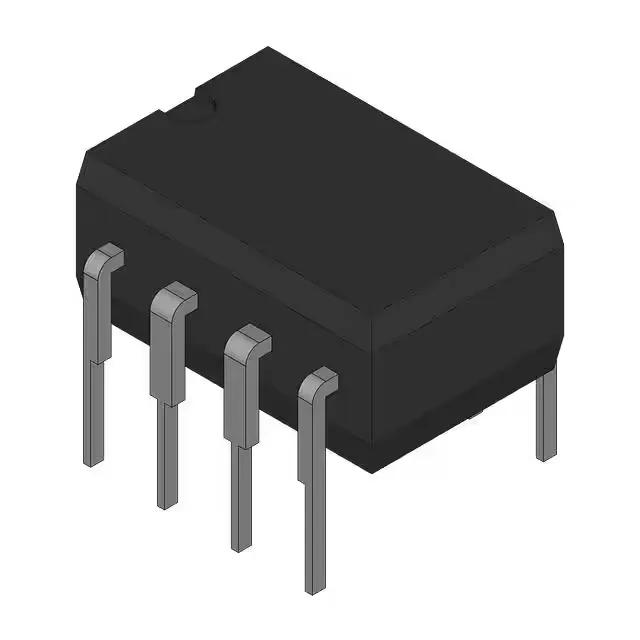
Texas Instruments LM2671N-ADJ/NOPB — Discrete Semiconductors

LM2671N-ADJ/NOPB SIMPLE SWITCHER Buck Regulator, 500 mA

MPNLM2671N-ADJ/NOPB
End of Life

Texas Instruments SIMPLE SWITCHER® LM2671N-ADJ/NOPB, step-down (buck) regulator, adjustable output, 500 mA, 260 kHz, 8-DIP (0.300", 7.62 mm) through-hole package, -40°C to 125°C junction temperature.

$4.62Ref. price · indicative, final on quote
Packaging8-DIP (0.300", 7.62mm)
RoHSROHS3 Compliant
SeriesSIMPLE SWITCHER®
Independent supplier — new & surplus stockAuthenticity-screened · ESD-safe packingListing updated Aug 2026

Specifications

LM2671N-ADJ/NOPB specifications
ParameterValue
SeriesSIMPLE SWITCHER®
Output typeAdjustable
MountingThrough Hole
Voltage - input6.5V
Voltage - output37V
Voltage - output (Min (Fixed))1.21V
Output current500mA
Frequency - switching260kHz
I/O channels1
Operating temperature-40°C ~ 125°C (TJ)
PackageTube
FunctionStep-Down
TopologyBuck
Case8-DIP (0.300\", 7.62mm)
Output configurationPositive
Synchronous rectifierNo

Product details

Buck regulator for 12 V / 24 V industrial rails — 500 mA, adjustable output

The Texas Instruments LM2671N-ADJ/NOPB is a SIMPLE SWITCHER® step-down (buck) regulator delivering up to 500 mA from a 6.5 V to 40 V input rail. Output is adjustable from 1.21 V up to 37 V.

500 mA output — sizing the load budget

The 500 mA continuous output is the hard ceiling for this regulator. It powers a handful of op-amps, a small FPGA core rail, or a relay coil supply — but not a multi-amp load.

Through-hole 8-DIP — legacy fit and rework

The 8-pin DIP (0.300" width, 7.62 mm pitch) is a through-hole package. It plugs into a standard DIP socket or solders directly into plated through-holes. This is the package for bench prototypes, low-volume production, and rework of older boards where an SMD regulator would require a layout change.

The -40°C low end covers cold-start conditions; the 125°C upper limit requires careful thermal design (heatsink or airflow) when running near full load at high ambient.

Active, RoHS3, no synchronous rectifier

It does not use synchronous rectification, so the external Schottky diode is required — factor that into the BOM count and board area. The non-synchronous topology is simpler and cheaper than a synchronous FET design, but efficiency suffers at low output voltages where the diode forward drop becomes a larger fraction of the output.

Frequently asked questions

Can I use LM2671N-ADJ as a replacement for LM2671-ADJ?

The LM2671N-ADJ/NOPB is the through-hole (N) version with the NOPB (lead-free / RoHS) suffix. The LM2671-ADJ (without N) is the surface-mount version. They are not pin-compatible — the package differs. Check your board's footprint before substituting.