Boost converter with a 2.2 A switch — what the current rating means for your output
The LM2623MM/NOPB is a step-up (boost) DC-DC converter from Texas Instruments, built around a 2.2 A internal switch. That switch current is the peak current the inductor sees, not the continuous output current — the actual output current you can deliver depends on the input-to-output voltage ratio and the switching frequency. At a 3.3 V input boosting to 5 V, the 2.2 A switch supports roughly 1.2 A output; at a higher step-up ratio from a single-cell Li-ion (3.0 V to 12 V), the output current drops to about 500 mA. The converter operates from a minimum input of 0.8 V, which means it can start up from a nearly depleted alkaline cell or a single NiMH battery. The maximum input and output voltage is 14 V, so the part suits battery-powered equipment, portable instruments, and low-voltage sensor nodes that need a regulated higher rail. Switching frequency is programmable from 300 kHz to 2 MHz via an external resistor. A higher frequency shrinks the inductor footprint (smaller value, smaller core) but increases switching losses; a lower frequency improves efficiency at light loads. The 2 MHz ceiling keeps the fundamental switching noise above the AM radio band, which matters for noise-sensitive portable gear.
Non-synchronous rectification — the external diode is part of the BOM
The LM2623MM/NOPB uses a non-synchronous rectifier topology, meaning the output diode is external. This adds a Schottky diode to the BOM (typically a 1 A, 20 V part) but keeps the controller simple and the quiescent current low. The trade-off is slightly lower efficiency at high output currents compared to a synchronous boost, but the external diode lets you optimise the forward voltage drop for your specific output voltage and load range.
Package and temperature grade for production planning
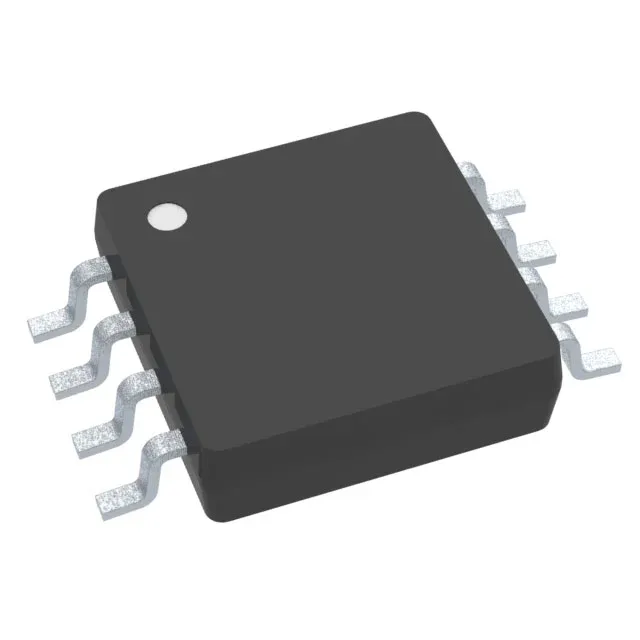
The device is offered in an 8-MSOP (0.118" wide, 3.00 mm) package, also listed as the supplier device package 8-VSSOP. The 0.65 mm pin pitch is standard for this footprint family and routes easily on a two-layer board. Packaging options include Tape & Reel (TR) for automated pick-and-place in volume production and Cut Tape (CT) for prototype or low-volume builds. The RoHS3 compliance covers the EU RoHS exemption list through 2024, so the part is acceptable for new designs shipping into Europe without a waiver.
Active lifecycle — no end-of-life pressure on this BOM line
No stock-holding claim is made; the sourcing posture is per-quote.