15V fixed-output buck — what the ratings tell you
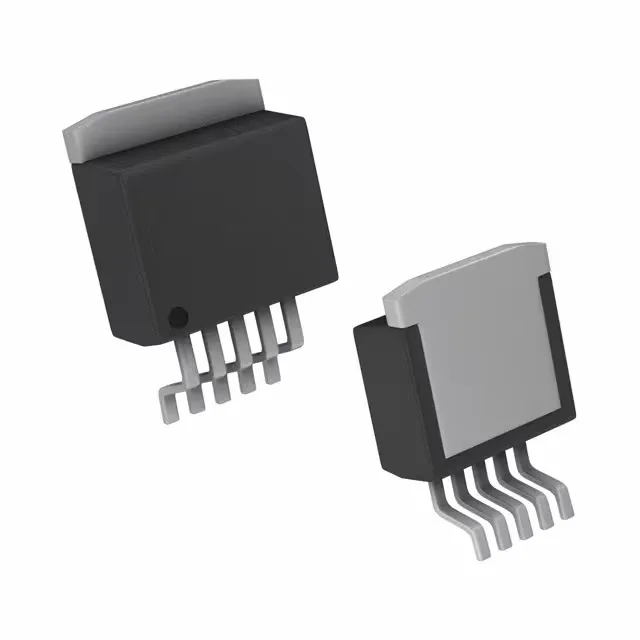
The LM2576S-15/NOPB is a first-generation SIMPLE SWITCHER® step-down regulator from Texas Instruments, delivering a fixed 15V output at up to 3A from a 4V to 40V input rail. The 52 kHz switching frequency is low by modern standards — it keeps switching losses minimal but requires larger inductor and capacitor values than a 200 kHz+ part would. The non-synchronous (diode-rectifier) topology means the external Schottky catch diode must handle the full 3A peak current and the reverse voltage equal to the input rail. The TO-263-5 (DDPAK) package has a large copper tab on the output pin; the PCB copper area under that tab sets the effective thermal resistance, so the layout directly determines how much current the part can deliver at high ambient.
The 52 kHz fixed-frequency architecture and the TO-263-5 footprint narrow the drop-in replacement options; a pin-compatible substitute from the same SIMPLE SWITCHER family would need to match the 15V fixed output and the DDPAK pinout. Because the part is obsolete, any stock we locate is new-old-stock or surplus from the channel. Date codes will vary, and the inventory is finite — once the remaining lots are consumed, the only option becomes a redesign around a current-production regulator. If your project is still in development, consider migrating to a newer SIMPLE SWITCHER variant or a pin-compatible third-generation part before the existing stock runs dry.
Heatsinking and layout — the tab is the thermal path
The LM2576S-15/NOPB does not include a synchronous rectifier, so the external Schottky diode and the inductor carry the full output current during the off-cycle. Without that copper area, the part will hit thermal shutdown well below the rated current, especially at high input voltage where the dropout across the switch is larger. The 52 kHz switching frequency produces ripple at the inductor and output capacitor that is easy to filter but requires a larger inductor — typically 100 µH for the 15V output at 3A. The fixed output voltage means no external feedback divider is needed, which simplifies the BOM but also means the output is non-adjustable: if your rail needs 12V or 18V, this is not the part.