52 kHz buck — what the switching frequency means for your BOM
The LM2576HVSX-5.0 is a fixed 5 V output, 3 A step-down regulator from the SIMPLE SWITCHER family, switching at 52 kHz. That low switching frequency is the defining trade-off: it keeps switching losses low and simplifies EMI filtering — no need for a snubber or ferrite bead on the input — but it demands a larger inductor (typically 100 µH to 330 µH for a 3 A design) and higher output capacitance than a modern 500 kHz+ part. The 60 V input maximum covers 48 V industrial rails, 24 V truck systems, and 12 V automotive with generous derating headroom.
3 A output and the external diode
This is a non-synchronous buck — the inductor current freewheels through an external Schottky diode during the off-time. The 3 A continuous rating assumes a Schottky with a forward current rating of at least 3 A and a reverse voltage rating above the input maximum. A 5 A, 60 V Schottky in a DPAK package is a common pairing. The diode's forward voltage drop directly sets the efficiency in the 2–3 A range; at 3 A and 52 kHz, a 0.5 V Vf diode dissipates about 1.5 W, so the diode needs its own copper area or a heatsink.
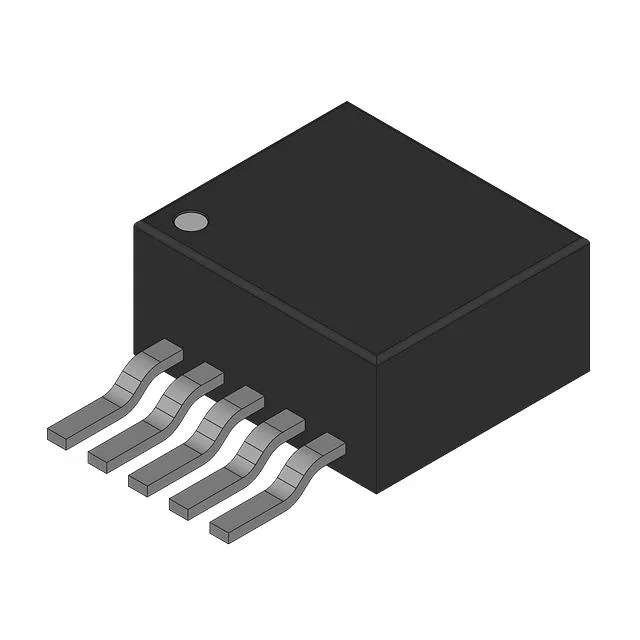
DDPAK/TO-263-5 — thermal reality for the rework bench
The DDPAK-5 (TO-263-5) package has an exposed tab on the bottom. For a 3 A load at 52 kHz, expect the tab to run hot; the junction-to-ambient thermal resistance depends heavily on the PCB copper area. A 1 oz copper board with 6 cm² of tab-connected copper keeps the junction under 125°C at 3 A with 12 V in.
The 125°C junction limit means the ambient temperature plus the temperature rise from the 3 A load must stay under that ceiling — a 85°C ambient with a 40°C rise from the regulator leaves no margin, so derate the output current or add forced air.
For dual-sourcing resilience, the LM53625LQURNLRQ1 is a functional peer in the same buck family, but it switches at 2.1 MHz and is synchronous, so the inductor and diode BOM positions differ.