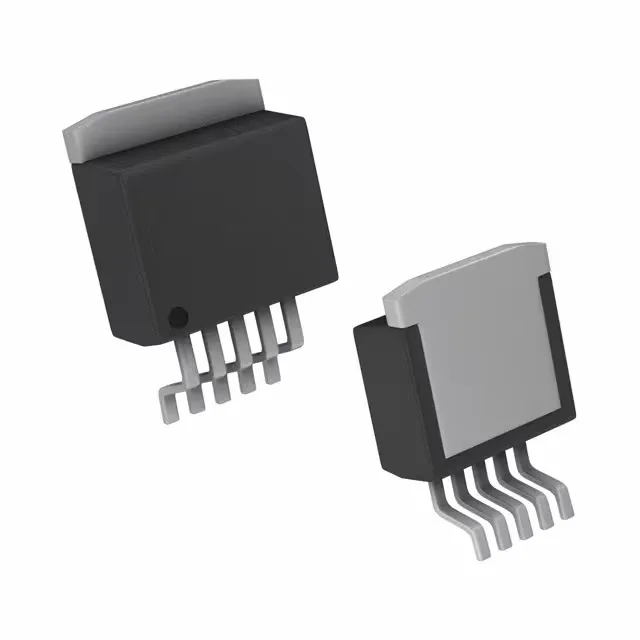
Texas Instruments LM2576HVS-ADJ/NOPB — Power Management (PMIC / Gate Driver)

LM2576HVS-ADJ/NOPB SIMPLE SWITCHER® Buck Regulator, 3 A

MPNLM2576HVS-ADJ/NOPB
Active

Texas Instruments SIMPLE SWITCHER® series, LM2576HVS-ADJ/NOPB, Step-Down Buck Regulator, Adjustable Output, 3 A, 52 kHz, 4 V to 60 V Input, DDPAK/TO-263-5, -40°C to 125°C.

$9.2400Ref. price · indicative, final on quote
Independent supplier — new & surplus stockAuthenticity-screened · ESD-safe packingListing updated Jul 2026

Specifications

LM2576HVS-ADJ/NOPB specifications
ParameterValue
SeriesSIMPLE SWITCHER®
Output typeAdjustable
MountingSurface Mount
Voltage - input60V
Voltage - output57V
Voltage - output (Min (Fixed))1.23V
Output current3A
Frequency52kHz
I/O channels1
Operating temperature-40°C~125°C(TJ)
PackageTube
FunctionStep-Down
TopologyBuck
CaseTO-263-6, D²Pak (5 Leads + Tab), TO-263BA
Output configurationPositive
Synchronous rectifierNo

Product details

3 A buck regulator with a 60 V input ceiling

The Texas Instruments LM2576HVS-ADJ/NOPB is a SIMPLE SWITCHER® series step-down (buck) regulator delivering 3 A continuous output from a 4 V to 60 V input rail. The adjustable output version sets the regulation point with an external resistor divider from a 1.23 V reference.

52 kHz switching — inductor sizing and EMI

The fixed 52 kHz switching frequency is low by modern standards, which means the inductor must be sized for a larger volt-second product — expect a 100 µH to 330 µH shielded inductor for a 3 A design. The trade-off is lower switching losses and a cleaner fundamental EMI peak that stays below 150 kHz, easing conducted-emission filtering in CISPR 25 and EN 55022 environments.

DDPAK/TO-263-5 — surface-mount with a thermal tab

The DDPAK/TO-263-5 (D²Pak) package is a surface-mount variant of the TO-220 with an exposed copper tab on the bottom.

Frequently asked questions

Does LM2576HVS-ADJ/NOPB require external compensation components?

The SIMPLE SWITCHER® topology uses internal compensation. The external bill of materials is limited to the input capacitor, output capacitor, catch diode, and inductor — no external RC compensation network is needed.